• Archives

  • Categories:

  • Other profiles

SCaLE 23x

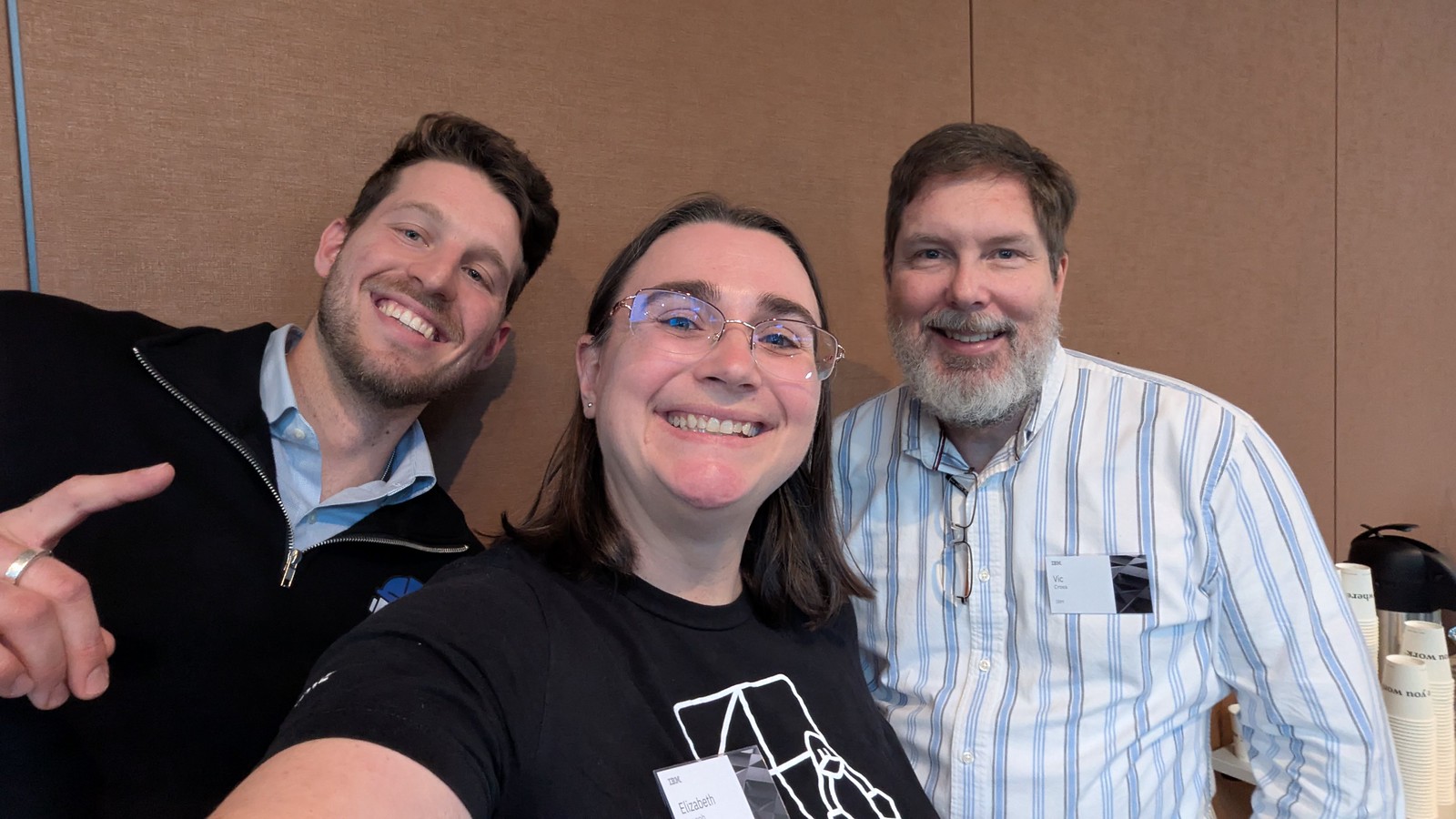
Last week I had the pleasure of attending SCaLE 23x in Pasadena, California. I love SCaLE, it’s probably my favorite conference. It’s big, but it still feels so local, and I always walk away having met new, exceptional people, and with the warmth of connection I feel from seeing some of my closest friends in the open source world. The weather is almost always gorgeous around this time of year, and there are a ton of places that are easy to walk to for lunch and dinner. My arrival ritual these days it taking a walk south to the Whole Foods nearby to pick up some breakfast foods and coffees to enjoy each morning before the conference kicks off at 10AM. 10AM! What a glorious time to start!

The flight down from San Francisco was a quick regional flight into Burbank, my go-to airport for this conference so I can avoid LAX. And then I spent Wednesday evening getting settled in and putting some finishing touches on my talk based on some feedback I had requested from some community members working on projects I had an interesting in learning about.

Thursday is when the magic began! I spent the morning picking up my badge and immediately seeing several familiar faces. It didn’t take long to meet up long time friends from our time in the Ubuntu community Jorge and Amber, and we all went out to lunch.

Talk-wise on Thursday I found myself attending several AI talks as part of the Kwaai Summit.

So, AI. We are in the middle of an AI revolution in the tech industry and things are moving fast. A year ago a lot of the AI being used in tech was being marketed as helpers for developers. At SCaLE I heard someone suggest that we treat AI like a junior developer. We’re now replacing junior developers. But I had an experience over the holidays where I was in the trenches with code these “AI junior developers” were spitting out, and it needs a lot of guidance. Without that, the code, documentation, and even commit messages can come out nonsensical and solving things in way that is not “clever”, they legitimately don’t make sense when viewed in the correct context. It also took away the thoughtful collaboration that I love of development: How do we solve this? Can you explain what I’m reviewing? Why did you make this decision? When you’re met with a series of shrugs and a finger pointed at the AI, the job of thinking ends up solely on the person reviewing the change, and that means more experienced developers doing the reviews are being buried in AI slop code.

The technology will get better, and I anticipate an absolute decimation of our industry job-wise. I’m not exempt from this. Plus, there are real environmental concerns about power consumption and resources being used to build out all the data centers to implement these AI solutions, and I worry that it will be painful for our society in a way that may not be ethical. But we aren’t going back, that’s not how technology works in our world.

Add in that so much of this space is flush with more money than the world has ever seen, and decisions driven by greed and a horrifying lack of consideration for humanity seem to winning.

So, why did I run off on this terrifying, negative AI rant? I wanted to share what head space I was in when I walked into SCaLE. I’ve used AI tooling, and I’m constantly learning, but I’m deeply worried about it.

Thankfully, there are still good people doing good things in AI and some of those people were speaking at SCaLE.

As I strolled into the Kwaai Summit it was refreshing to be reminded of some of the more optimistic views of AI, and how success doesn’t necessarily have to follow the money. AI can be used in ways that benefit us all. There are tedious tasks and “impossible” problems that are starting to be solved by AI. Can I actually get a good handle on a big chunk of open source projects on GitHub supporting s390x? Possibly! Can we finally cure some of the most dangerous forms of cancer? Maybe! And there are people building communities around things like Beneficial General Intelligence (BGI, a play on AGI, the Artificial General Intelligence that tends to be the holy grail of AI) where things like ethics and sustainability are considered. These are my people. These are the people who built the first online social networks and open source projects. This is the messaging that I found so inspiring when I first got into open source software and what made me so fully devote my life’s work to it. It was nice to be there.

On Friday I attended Guinevere Saenger’s talk on building out developer infrastructures, which brought up a lot of points one might not necessarily think about when doing so. From there I went to Jon “maddog” Hall’s talk on “Open Source In Computer Higher Education – Past, Present and Future” which was definitely a highlight for me. I don’t need to learn how to teach computer science in higher education, but I do love hearing whatever he has to talk about because he has so many wonderful stories. He took us on a tour of this career with an eye toward education, dropping references from everything to the IBM System/360 to learning assembly from difficult text books that he read solo and then went on to teach. He’s a strong proponent for learning topics deeply, and teaching students to learn how to learn so they can thrive in an industry that requires continuous learning. We’re all in agreement there.

That evening I joined a bunch of folks from The Software Freedom Conservancy for dinner and software freedom discussions. It was a lovely evening and I had the pleasure of meeting some new people, including a fellow from Oakland Privacy who told me about the StrayCap Multispace in Hayward that I’ll have to check out some time soon!

I’ve supported the Conservancy for many years, and have known several of their staff for even longer. Need a free software license violation acted upon? This is the group that does that. They get a remarkable amount done with the staff and budget they have, and I’m incredibly grateful for that. Please consider donating.

The keynote from Cindy Cohn, Executive Director of the EFF, on Saturday morning was wonderful. I’ve been a supporter of of the EFF for years, and am closely aligned with most of their views. It was fascinating to hear about her work in this space, and the fundamental protections that she’s worked to help pioneering technologists secure over the years. I vaguely knew that encryption was restricted by the US government in the earliest days of the internet, but I didn’t realize it was classified as munitions which ultimately meant that encryption algorithms couldn’t be shared and collaborated on online. Wow. Could you imagine the internet without encryption? Our world? Cindy, with an army of early free software hackers, argued in federal court in San Francisco and for over a decade beyond that to make sure encryption was freed from this classification. This story was the first of three that she dives into in her new book Privacy’s Defender: My Thirty-Year Fight Against Digital Surveillance which I promptly pre-ordered. Her call to action to us hackers today was to stay engaged in this fight so that we show up for all the future legal battles that have the potential to threaten the future of our world and lives with regard to digital freedom. I had the pleasure of running into her later in the conference to thank her for her talk, and I had the presence of mind to pull out a piece of paper to have her sign so I could put it in my book when it arrives; I’ll have a signed copy, kind of! Then I went to the EFF booth to do my annual contribution.

After the keynote I was able to meet up with Kaitlyn Davis, a new colleague at IBM who joined us from HashiCorp and I just started working with a couple weeks ago. She happens to live in southern California! So I made the case for her to come out to SCALE. She has some really helpful ideas around leveraging AI for open source contribution tracking and so we were able to sit down for about an hour and chat about IBM in general and drill down into some of the problems I’ve been focused on to see where she wants to jump in. It’s not every day that I have the pleasure of working with someone like her, so I’m really eager to see what we come up with together in the coming months. See? I’m not negative on all uses of AI.

From there, it was time for my talk on Open Source in Closed Ecosystems. Originally I was planning on just drawing from my experience in the mainframe world, but after a chat with John Mertic of The Open Mainframe Project I was convinced to draw from a broader pool of expertise and to look into Automotive and Motion Picture industry use cases. I was fortunate that Alison Chaiken of Automotive Grade Linux (AGL) and Emily Olin who has worked on both AGL and the Academy Software Foundation (ASWF) were able to get back to me quickly regarding questions I had about the initiatives. I was also thankful to get time with Nithya Ruff whose expertise in running open source software programs across the industry has been incredibly valuable to my own work, and the broader community through her extensive work in the community of the years, and direct contributions to the TODO Group.

The talk had some rough edges flow-wise, and I’d like to flesh it out with more examples and talk to more people in industries where open source hasn’t taken a firm hold yet to see what barriers they’re encountering in their organizations. But I had some great conversations after my talk and I think it generally went well. Slides from the talk are available here: /presentations/2026/Open_Source_in_Closed_Ecosystems_-_SCALE_23x.pdf (1.3M pdf)

It was nice to run into Dave Neary, whose Open Source in Business series on YouTube got me some clues I need for my talk too. He gave a couple multiarch talks, and though they were focused on ARM64 it was still nice to hear someone talk about multiarch manifests and containers, since I bump into some confusion from community members about them. He gave some nice demos using Argo CD and Argo Rollouts that I’d like to take a closer look at.

Speaking of multiarch, I then enjoyed a talk by Amy Parker whose talk focused on QEMU user mode. I’ve used QEMU on and off over the years, but honestly since I’ve shifted my focus to bare metal testing, I’ve used it a lot less. I don’t have a lot of experience with the user mode emulation that she covered, which made the talk a fascinating dive through binfmt_misc, ld_preload, and chroots to accomplish a lot of interesting work across architectures. She also talked about using FatELF to create universal binaries, which wasn’t even on my radar. So many fun things to dig into!

Saturday evening I had the pleasure of joining Nathan Handler for dinner at a sushi place nearby. I’ve now had my first sake bomb. But just one!

Happy Sunday! The opening keynote was presented by Mark Russinovich of Microsoft, who, poor guy, spent the first 15 minutes of his talk convincing us that in spite of being known for Windows Internals, both he and Microsoft have a lot of Linux credibility. With that taken care of, he dove straight into a great tour of open source security solutions and how they relate to the growing interest in secure supply chains today. I was happy to see the security components of my own talk from the previous day reiterated, but more broadly, I’m glad SCaLE brought someone in to talk about all of this. Open source has made tremendous strides in recent years related to security, but it doesn’t get as much attention as I believe it deserves, both in terms of usage and awareness, and having more people to work on it, and its importance is only increasing.

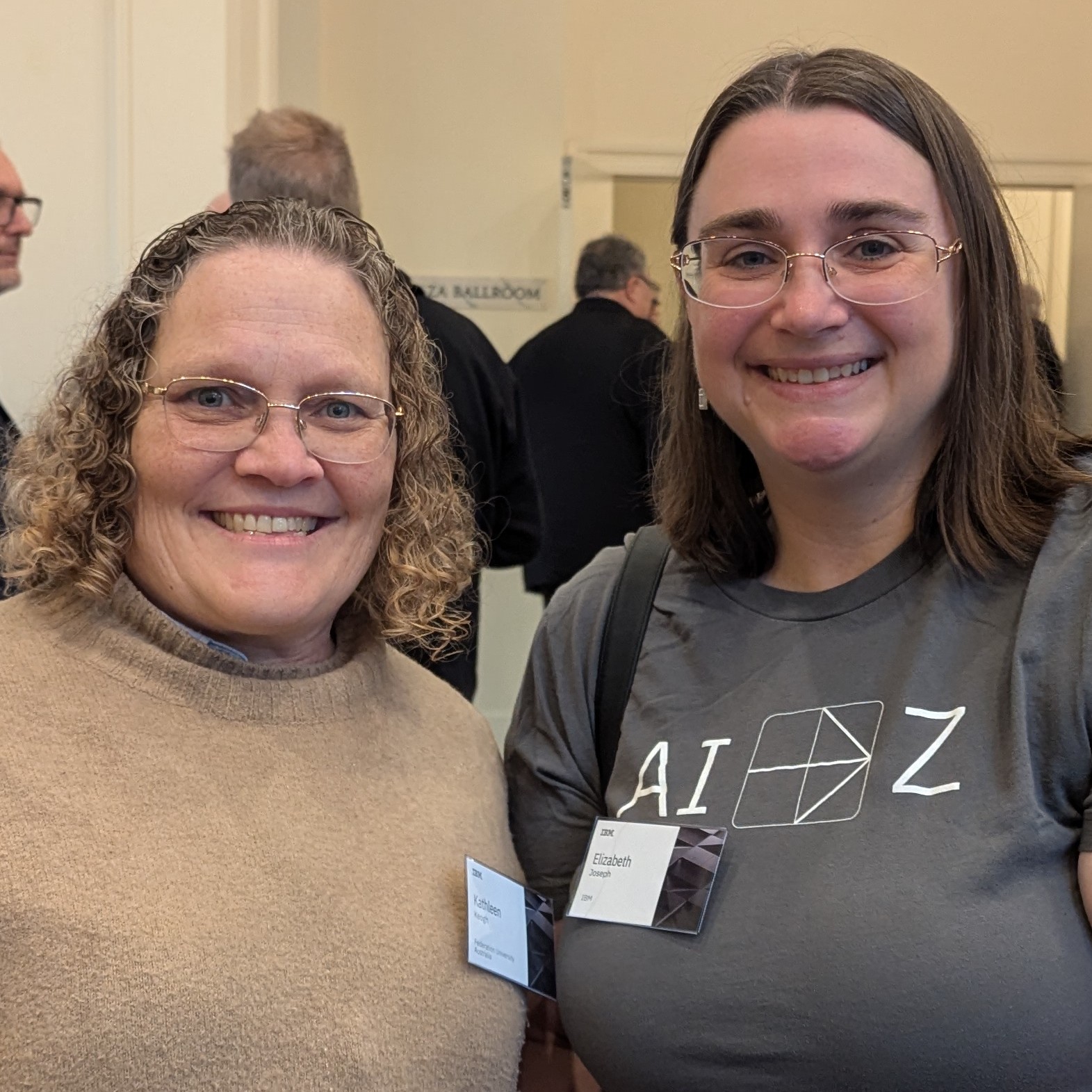
The expo hall at SCaLE is always a delightful place to walk through, and this year was no exception. They have a wonderful mix of big, paid booth areas for larger companies, and smaller booths for non-profits, so it always brings a great assortment of people. I had a lovely time catching up with my friends from the Ubuntu community. It’s always a pleasure to catch up with Nathan Haines and George Mulak who’ve been quite involved in the Los Angeles computing scene for years. It was nice to get some time to chat with Erich Eickmeyer, lead for Ubuntu Studio, and I was pleased to learn that his wife, Amy Eickmeyer, is a professional educator and actually got the Edubuntu flavor off the ground again back in 2022! I had planned on a DIY lockdown of Ubuntu for our kids this year, but I’ll have to take a look at Edubuntu now.

And the RISC-V booth was on my list too, as I’m always eager to learn the latest (you know me and architectures!). That’s where I met a fellow IBMer who was involved with the Works with RISC-V community which I didn’t even know existed. Cool. I was able to ask about HDMI support on my VisionFive 2 and learn that there should be mainline kernel support soon, and learned that people are saying good things about the latest RISC-V mainboard for the Framework laptop. My kids like to remind me I have a lot of laptops, so I’ve held off on Framework for now, but I’ll have to take a closer look at this one.

I also went to a talk by Brendan O’Leary on From COBOL to Claude: What Hopper Knew (actually, his slides swapped “Claude” for “Cursor” (the AI coding environment). Things in AI move fast). I enjoyed this talk and his premise, given all I’ve said above about the inevitability of AI in our industry. He began by talking about Rear Admiral Grace Hopper’s desire to make “programming” computers a more human-language driven endeavor, and how that began with her FLOW-MATIC and ultimately COBOL, which is still widely used today. His belief is that she’d be happy that anyone today can vibe code their own application, and made the same comparison I tend to do with evolution of coding. AI does have very, very important things that differentiate it from the previous major evolutionary steps of computer programming, but I just don’t believe that things like being nondeterministic are enough to so forcefully push back on it. Most of this talk continued by talking about how software engineering practices that professionals are using will simply need to be adjusted to have a lot more planning and a lot less hands-on coding, and with these research, plan, and implement frameworks in place we’ll be able to trust the results AI comes up with a lot more. I think he’s right.

The conference concluded with a walk down network memory lane with Professor Douglas Comer. I love computer history, so I was familiar with a lot of the general touch points he discussed, but since his focus was on networking there were a few things I’ve missed along the way. He talked about magentic tape mailers, how Endianness caused problem with computers communicating in the early days, and how a technology like TCP/IP or even the client/server model were not obvious. His stories around how phone companies charge for transit and the sorted path to get households connected to internet was really insightful, especially when paired with the observations from Cindy Cohn the day before.

Huge thanks to all the volunteers who makes SCaLE happen, I’m really happy I could make it down this year, and after seeing how many kids where there, I’m going to make plans to at least bring our eldest down for the weekend next year.

Resurrecting an Oliver 9 Typewriter: Part 2

When I wrote Resurrecting an Oliver 9 Typewriter: Part 1 back in 2024, I didn’t expect that it would take me two years to get back to it. It sits right here in my home office with me! Truth is, it wasn’t particularly usable following Part 1. The letters were still off and it needed more cleaning. As much as I enjoyed it as a display piece, I think it’s spent enough of its life like that (the last owner used it as a decoration) and it was time to get it back to being useful.

First up, I wanted to remove some of the rust and clean it up. I reached out to my hundreds of pals on Reddit for advice: Rust removal on an Oliver 9.

They persuaded me to leave most of the rust alone. The aged patina is not only an interesting look, the rust that creates the patina actually ends up being protective. Which lead me down a rabbit hole about rust. When it’s dense and unchanging like it is on most of the body of my Oliver 9, it’s probably best to leave it alone unless you’re actually attempting a full restoration. Hooray, the basic rust removal I did in Part 1 was holding!

I did want to remove some rust that was doing it no favors. The arms at the top of the bat wings were looking a bit bad-rusty so I took those apart and dropped them in Evapo-Rust over night. Then it took some time to get everything reassembled, I’m grateful I took pictures before I took everything apart.

In taking the carriage off and doing some other fiddling, I did discover that this typewriter was originally Oliver green (cool!) but at some point I believe it was repainted black (boo!). In all seriousness, I don’t actually mind when people customize their things to make them their own, collectibles for the sake of collectibles are overrated. I just really like the green color that came on some of the Olivers. There are enough black typewriters in the world. Alas.

With that all put back together, I wanted to make sure I re-threaded the ribbon correctly, which led me to this video: Oliver Typewriter Shop: Changing the ribbon on an Oliver No. 9 typewriter. That’s when I discovered that the ribbon advance wasn’t working properly. There are two bumps on the sides of the typewriter that you can click all the way right, left, or middle (neutral) and they are supposed to change the direction the ribbon moves in. They don’t. Upon inspection and watching The Vintage Type: Oliver Typewriter Ribbon Advance Not working? Things to look for. it was clear that the rod that connects them wasn’t doing its job of catching the mechanism, in fact it had warped slightly and just slides over it. As a result, the ribbon is stuck going in one direction. I fiddled with some nuts but they’re firmly rusted in place and I don’t have an adjustable wrench that’s small and strong enough to unstick it. So that’s just going to have to wait, maybe there will be a part 3! Or maybe I’ll just move the whole ribbon spool when it’s time to switch it.

Next up was replacing the feet. When I bought it, one foot was partially missing so it didn’t sit evenly. I threw some felt stickies on it so that it would at least not wobble while in display mode, but I always wanted to come back to it.

There are some 3d printer files for this, and that was tempting, but I really wanted some rubber feet. For these I went to The AntiKey Chop and they were swiftly delivered. Less swift was me actually replacing them. Turns out that rubber that’s over 100 years old not only hardens, but it doesn’t want to move from where it was inserted. I took advice from this eBay listing for 3d printed feet and went to town on it with a 1/2″ drill bit (I didn’t have the 5/8″ they suggested).

With most of the rubber removed, I doused some cotton balls in rubbing alcohol and stuck them in the holes, since I learned that rubbing alcohol could damage rubber – great! I want it damaged! I’m not sure if it helped, or if being moistened is what helped, but I then dug out the remaining rubber with a disposable screwdriver (what’s a disposable screwdriver? You know, the cheap one they send with toys sometimes). It made a huge mess, but it wasn’t hard as I had feared. Once they were all cleaned out, I popped the new feet in! Beautiful.

The last part of all of this was type alignment. I did some of this in step 1, but I think I lost patience somewhat and never quite got it where I wanted. But equipped with The Vintage Type’s Adjusting Upper Case Letters and Figures On An Oliver Typewriter video I was able to get closer to where I need to be.
After making adjustments for a while, I am not sure I lost patience earlier exactly, it’s just that it’s quite fiddly and I think the hardness of the platen (you’ll never get perfect strikes) and general fickleness of 100+ year old hardware means that with use, things tend to be imperfect and not quite land properly. But that’s ok, part of why we love typewriters is the character of the characters!

With everything I wanted to fix up completed and a fresh piece of paper inserted, I finally got to type on it for a little bit. I thought that being such an old typewriter and an unusual design would make it awkward to type on, but it’s actually surprisingly enjoyable. It’s a nice typewriter!

Next I’m going to spend a bit of time getting more closely acquainted with it. While I was ordering the replacement feet, I also bought a reproduction of the original Oliver No.9 Typewriter Instruction Manual, which was unnecessary – it’s online! I could print one myself! But it’s nice to just have something to hold that someone else got to worry about making sure came out nicely. And it did.

The 3D printed Index Typewriter: Part 1

Back in December the Index Typewriter – AEG Mignon popped up on Thingiverse. Having just bought a 3d printer, and being subscribed to some typewriter forums, this was very much aligned with my interests and I heard about it rather quickly. But surely, this is much too ambitious of a build for a newcomer to 3d printing! But MJ was up to the challenge, and we began tackling it on February 7th.

To back up a moment: What’s an Index Typewriter? Instead of using a keyboard with an arm for each key (or combination of keys), an index typewriter instead uses a flat reference “index” that you use a stylus with to point to the letter you want. The stylus is connected to the Type Element that rolls to your letter, number, or symbol when you hit a lever to strike. Ultimately, it’s a much simpler design than traditional typewriters, which made it an excellent choice for the world’s first 3d printed typewriter!
Also, if this sounds vaguely familiar, Madame Morrible uses a Mignon index typewriter in Wicked: For Good. It’s right after the scene where The Wizard is sitting in front of an Oliver typewriter. I was delighted!

Anyway, I printed the Index_Typewriter_Hardware_and_Printing_Guide.pdf and Index_Typewriter_Assembly_Guide.pdf so I could peruse offline, and ultimately use it for assembly. The first thing I’ll say about these is that the author, Keenan Finucan, did a spectacular job. They’re detailed and every step has pictures to help figure out the correct placement of things, and photographs where needed. I only needed to ask for a handful of clarifications throughout this process so far.

I bought this spring set on Amazon, which had almost all the spring sizes I needed (and the missing smaller one I was able to cut down from a larger) and picked up a standard black ribbon (which you can still buy at all sorts of places). From there, I selected my colors: Purple and Magenta PLA+. The “Rubber” components were printed in Gray TPU 95A. I then carefully went through all 150+ parts and renamed them which color I wanted them to be, whether they’d need high infill, and numbered them so they were being printed by order of assembly. I then uploaded them to our shared drive and asked MJ to print them for me (remember I said I’m still afraid to use a slicer and send it to the printer? I’ll get there). Tip: Though 3mf files can include a lot of details like nozzle size, these ones aren’t written that way and it’s best to just follow the Printing Guide.

Let’s be honest, it’s taking weeks to print everything, even with our shiny new Bambu H2D. In addition to working full time and having two young kids, we had to go through a couple cycles of drying the PLA+ filament, and MJ spent A LOT of time meticulously going through all the files I marked and plating them, then queuing up the plates so we could do the printing strategically with time and filament usage in mind.

Things started off quite nice and tidy.

And quickly descended into chaos with all the parts.

Most of the prints went well, but there were a few mishaps. MJ had to add a large brim along with the plate glue to the Paper Feed Panel.3mf because it shifted slightly during an overnight print, and things were not good in the morning. The printer figured out it had a problem much later while printing the platen core on the same plate, and thankfully MJ was able to salvage that and finish that print.

As I went through the instructions, there were a few sections which were somewhat unclear (Keenan might have fixed these by now, he’s been amazing with swiftly answering my questions!):

  • The “Roller Rods” referenced Stage 2, Step 8 are “Lower Roller Axle” and “Upper Roller Axle”
  • The following parts are logically lumped together as “Backspace Levers” in Stage 1, Step 8: Backspace End Lever.3mf, Backspace First Lever.3mf, Backspace Pawl.3mf
  • The “Carriage Bridge” mentioned in Stage 1, Step 10 the the Carriage Main Bridge.3mf
  • The following parts are all part of the “rest as shown” in Stage 1, Step 20: Margin Indicator Color Insert.3mf, Margin Indicator Lever.3mf, Margin Indicator Spring Lever.3mf, Margin Indicator Window.3mf, Margin Slider.3mf
  • The Pivot Lever Axle.3mf is part of Stage 3, Step 9

In retrospect, some of this is rather obvious, but with over 150 little parts and some of them quite similar, it’s easy to get turned around, and you really don’t want to try to insert something where it doesn’t fit!

The screws on the base plate were definitely a challenge, I guess there’s a reason we don’t tend to make screws out of plastic. In spite of doing the test screw fit early in the process, I think I might have stripped some of them as they went in anyway. But they all made it in and everything snapped together, so I guess it’s not a problem! I do have to be careful when this matters though.
Speaking of not fitting, we had to reprint the Ratchet Spring Lever.3mf and Ratchet Locking Pawl.3mf because when I put them inside the holes of the Alignment Comb Right.3mf the fit was so tight that they wouldn’t move, and since springs were placed in the inset, it was obvious that they should move. Bringing the size of the shaft down to 97% seems to have done the trick (thanks MJ!).

I then got the ribbon mounted and Stage 1 was complete! I have a couple springs that won’t quite stay put, and I’m concerned about the functionality of the Rachet Pawl, since it’s a really tricky fit and isn’t reliably catching on the Spool Advance Gear. I’m forging ahead though and will re-visit this when the rest is more complete.

We have several more pieces ready to print, but we decided to take a break from this and I’ve only just begun Stage 2 with the Carriage Assembly. It’s coming together though! Unfortunately we have a clog somewhere in our AMS that’s going to take some time to debug, and we’re leaving for a spring break trip back east next Friday, so here I pause our project!

We’ll complete you soon, dear Index Typewriter.

Flora and family in February

We kicked off February began by observing Tu B’shevat with the synagogue we recently joined, along with getting the boys started in Religious Sunday School. For Tu B’shevat everyone got together to plant a grape vine, which is added to a row of others they’ve planted in previous years. In the weeks since there’s been a mix of school just for the boys (MJ and I join them briefly for some songs, and then they spend 2 hours in class) and time filled with family activities, which we stick around for. It means that most Sunday mornings are spoken for now, but that was an inevitable progression in life with kids.

Our Saturdays will also soon be spoken for, as Aaron started T-Ball practice at the beginning of February. Monday evening they have practice, and Saturday they play a game. In preparation for all of this, we also had to go shopping. Aaron is now equipped with cleats, a bat, a batting helmet, and a glove, and it’s been a lot of fun to do with him. Adam is less enthusiastic since he comes along to practice with us, but we’ll find another activity for him to do soon.

Zara the cat has also really been enjoying post-cone life as her wounds remain healed and the fur slowly begins to grow back at the end of her tail. Now we just need to stop her from trying to run outside for an adventure every time we open the door.

In mid-February the boys had a week off from school for “ski week” where we did not ski. In fact, the storms were so bad that they advised no one to head to the mountains to ski due to dangerous conditions, including a deadly avalanche. Besides, we don’t ski, so instead we invited my mother to visit! The weather meant that for the second time here, my mother had to spend time in uncharacteristically soggy conditions, but we made it work. The first day she was here was forecast for the nicest, so we took the boys out to the Oakland Zoo and while cloudy, the rain was kept at bay.

On Sunday morning it was over to the Chabot Space & Science Center where we have a membership. The boys have gotten a lot better at sitting through planetarium shows, and that was definitely a highlight of our visit. The boys also had a lot of fun upstairs doing some of the more interactive exhibits. It was nice getting early before the rain picked up and it got busy, and it meant we could leave midday and still have time to go out to lunch elsewhere.

I took off from work for the next couple of days to spend with my mother and the boys, and those were a bit less exciting and gave us all time to relax and spend time together. On Tuesday we went to an indoor play area and then we off to swim class where Aaron graduated to the next level! It was nice to have my mother there for that, he was so proud to show off his graduation ribbon and the card he received for advancing. On Wednesday morning we got the sad news that one of her cats had fallen gravely ill, so that was quite the downer to conclude the visit with as I took her to the airport. Still, it was a nice visit overall, I’m glad she was able to get some nice time with the boys.

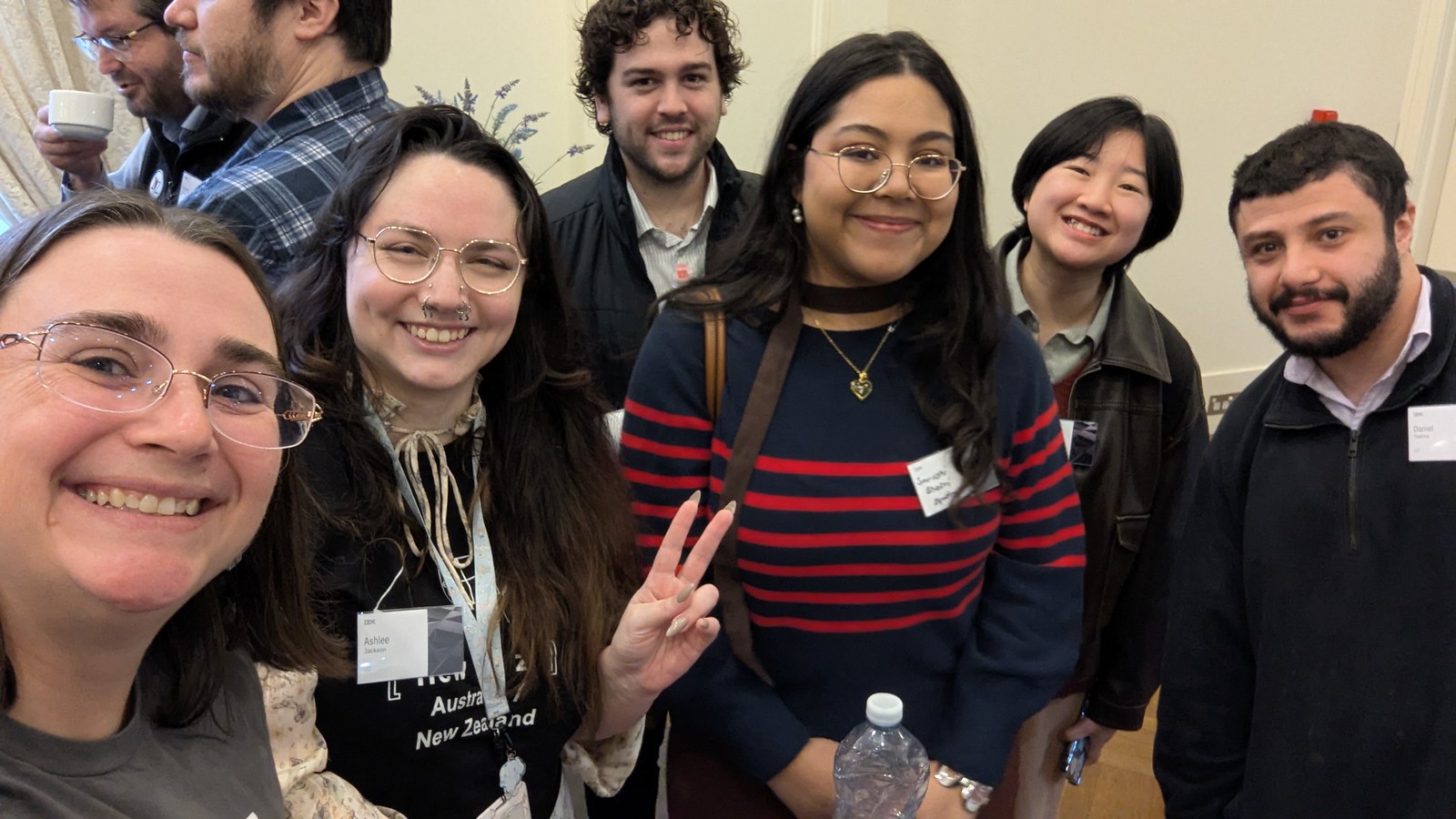
Work has been going well, and after a cooped up January, I made my way down to the IBM Silicon Valley Lab for a day to catch up with a colleague and attend a on-site division all hands. That same week I went up to San Francisco to meet up with a university student I met through an open source webinar back in December, which was a lot of fun. It reminded me how lucky I am to be in a role that gives me the opportunity to work with students whose curiosity and brains are always inspiring. Don’t listen to the “get off my lawn” types, our future is in good hands with the “kids these days”.

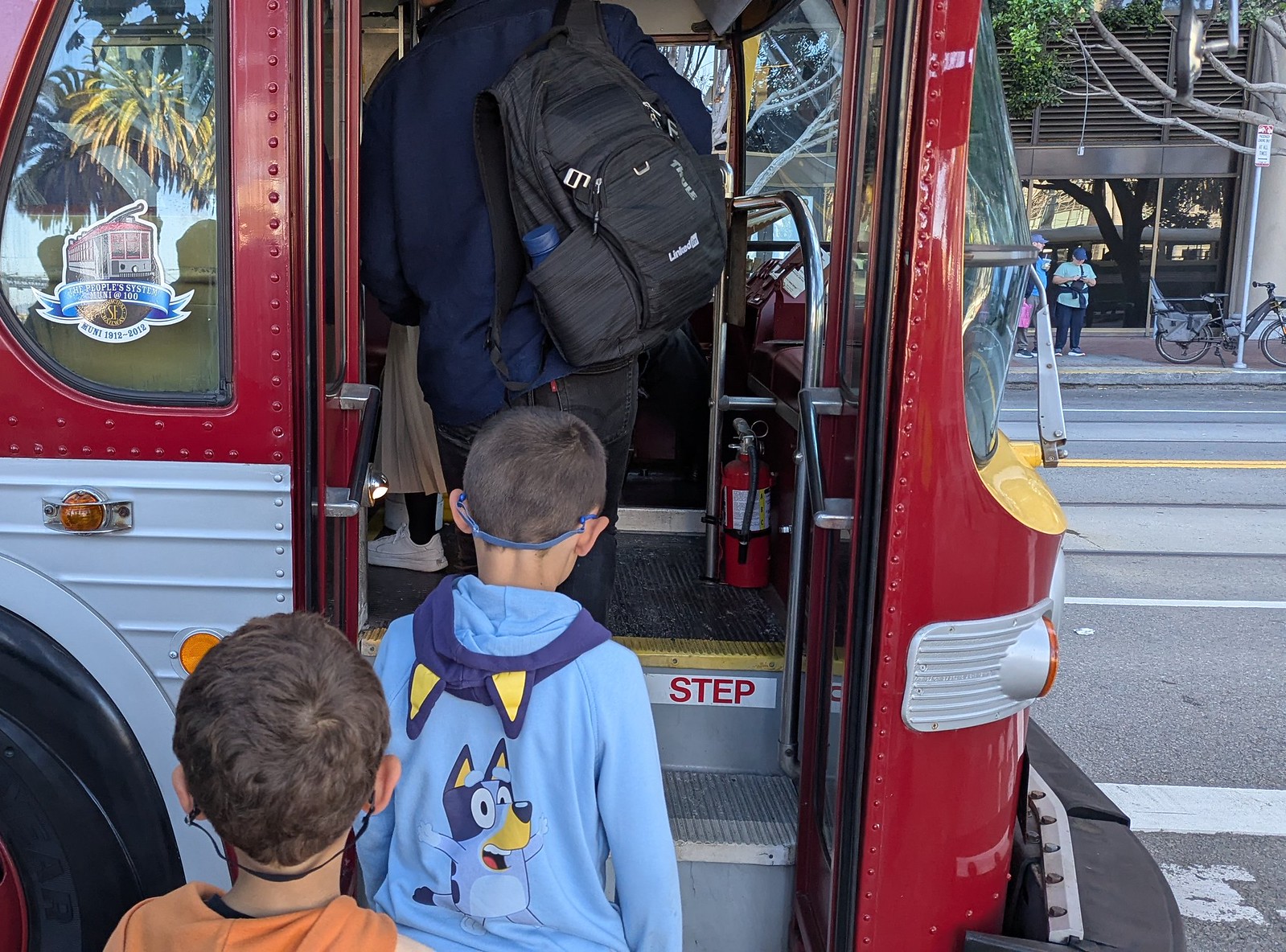
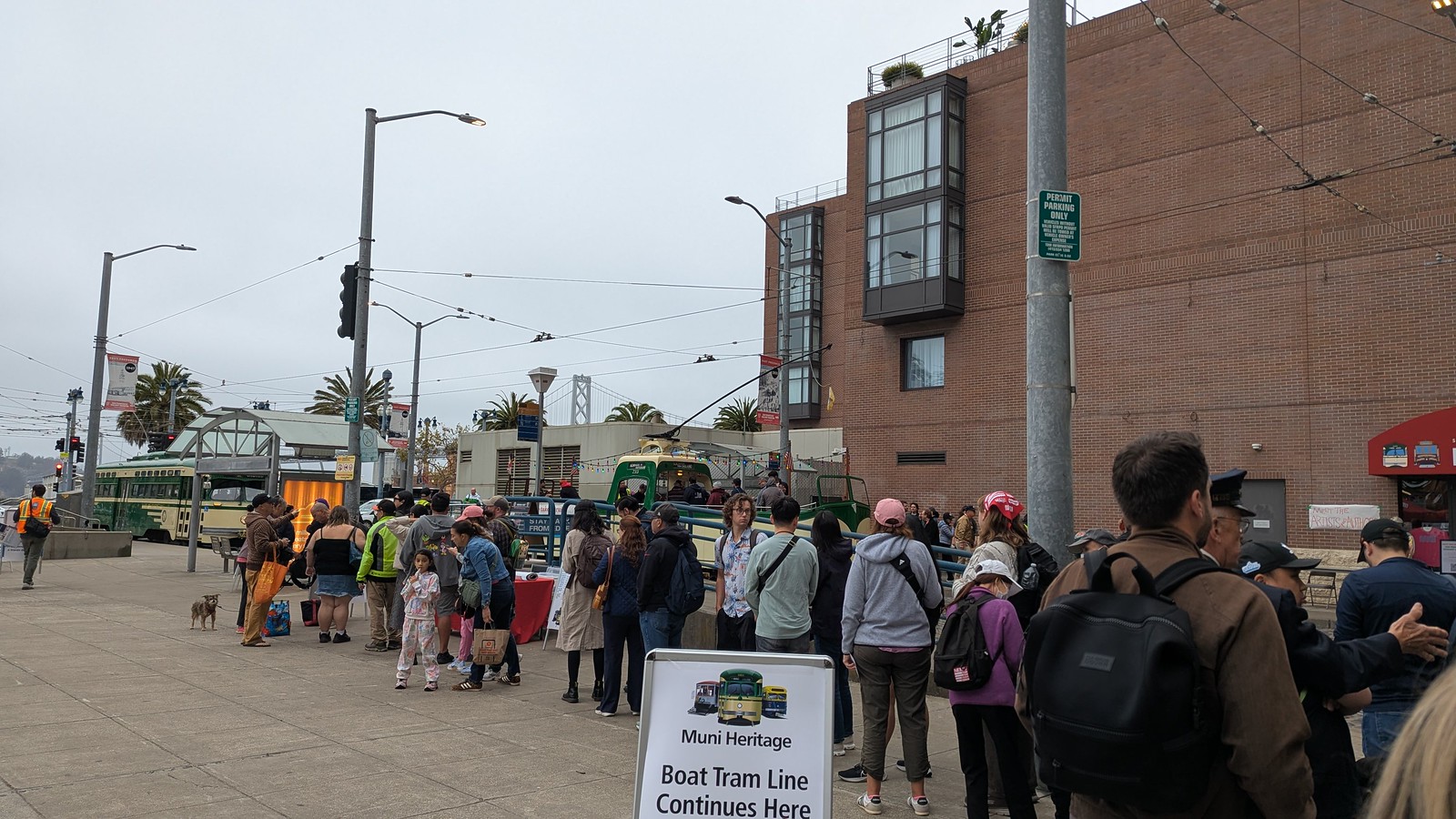
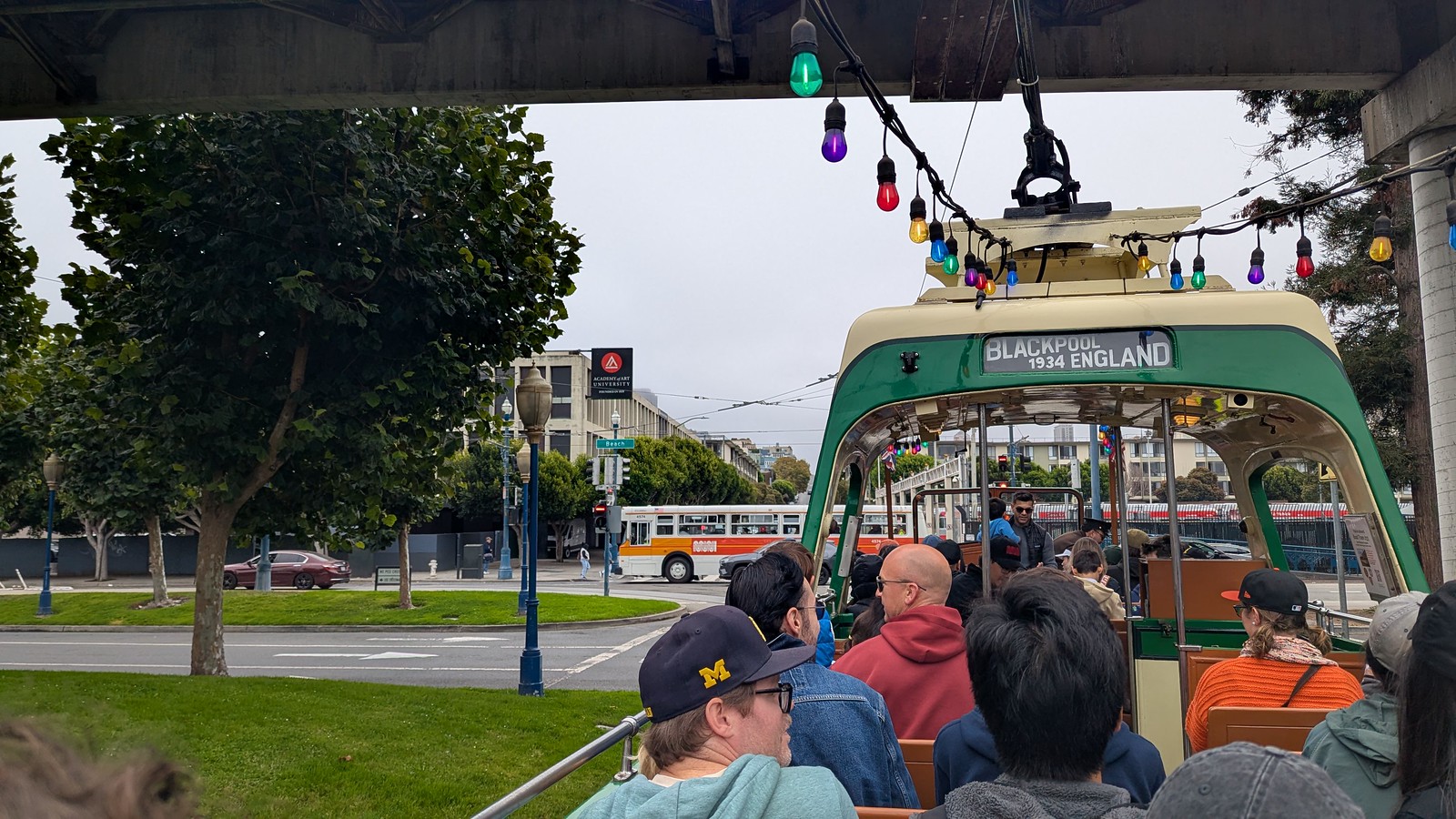
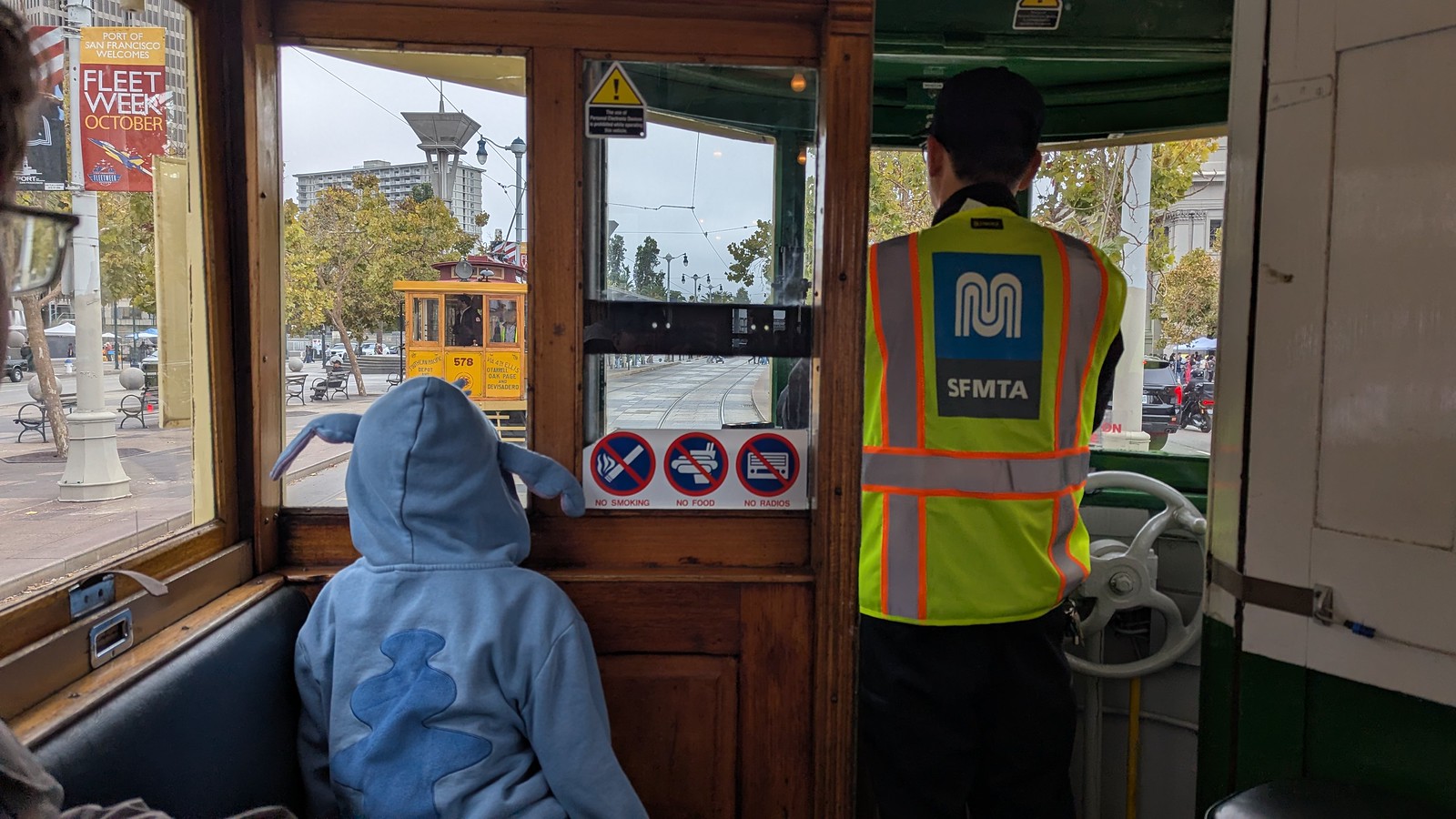
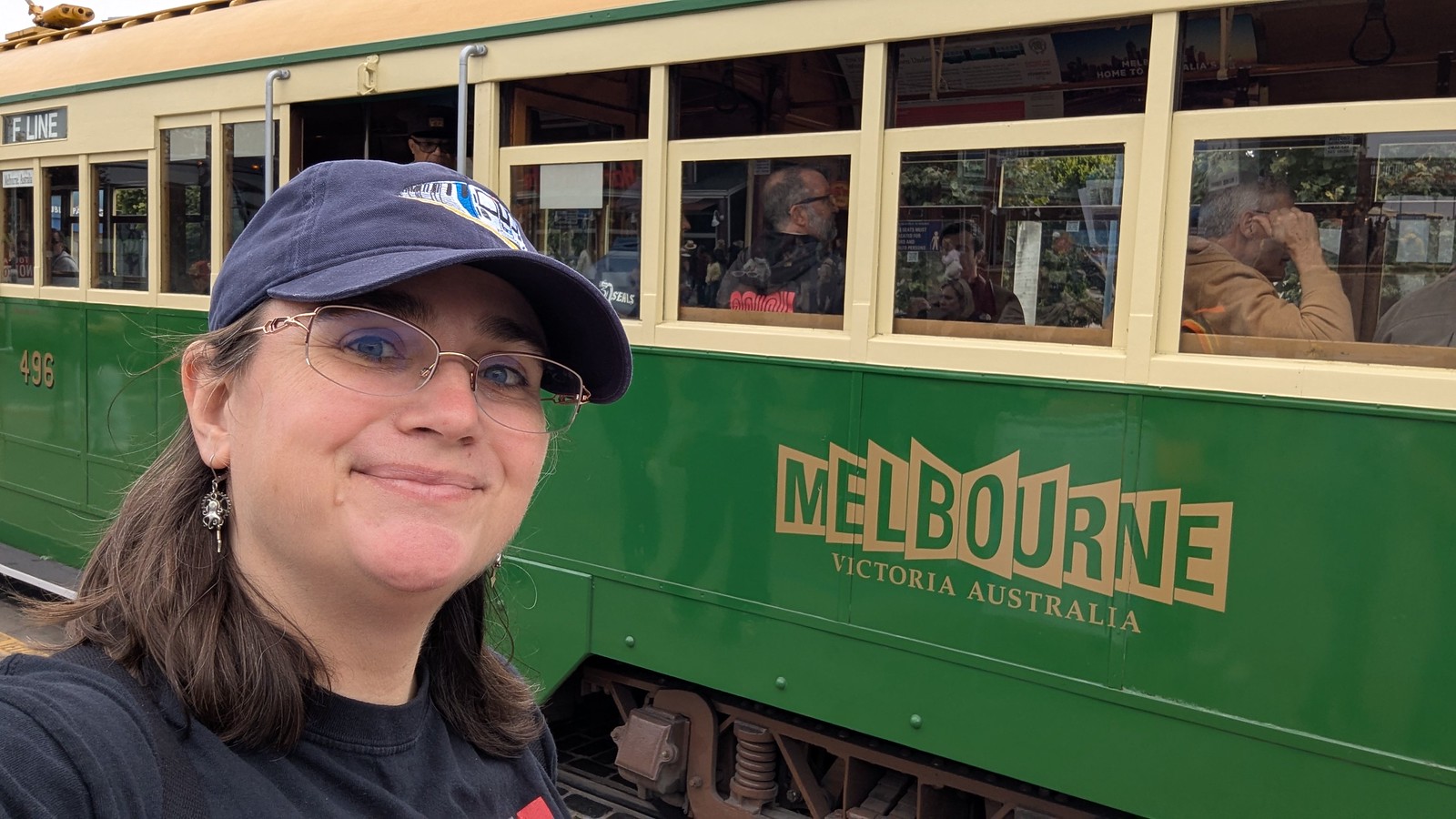
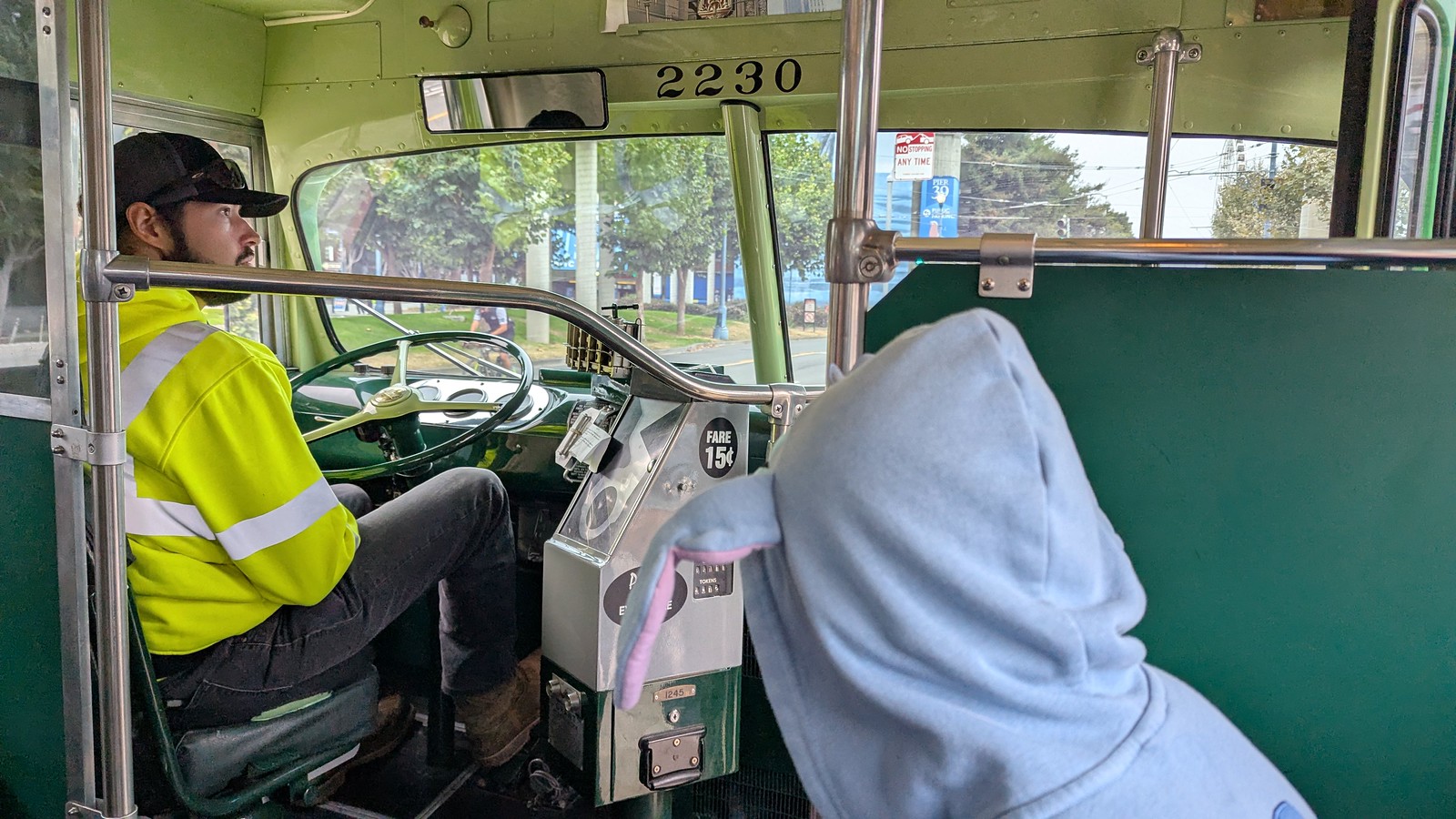
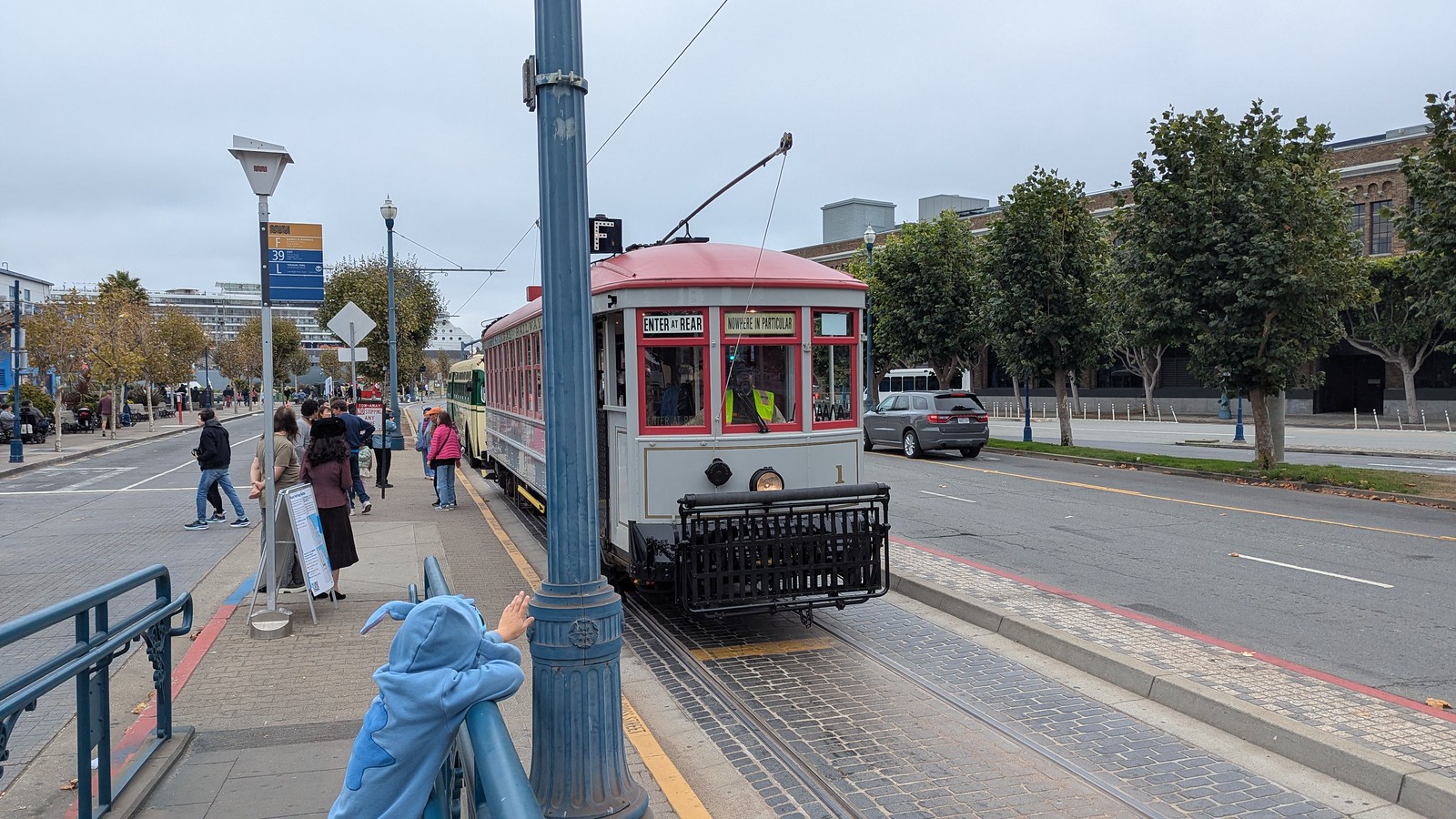
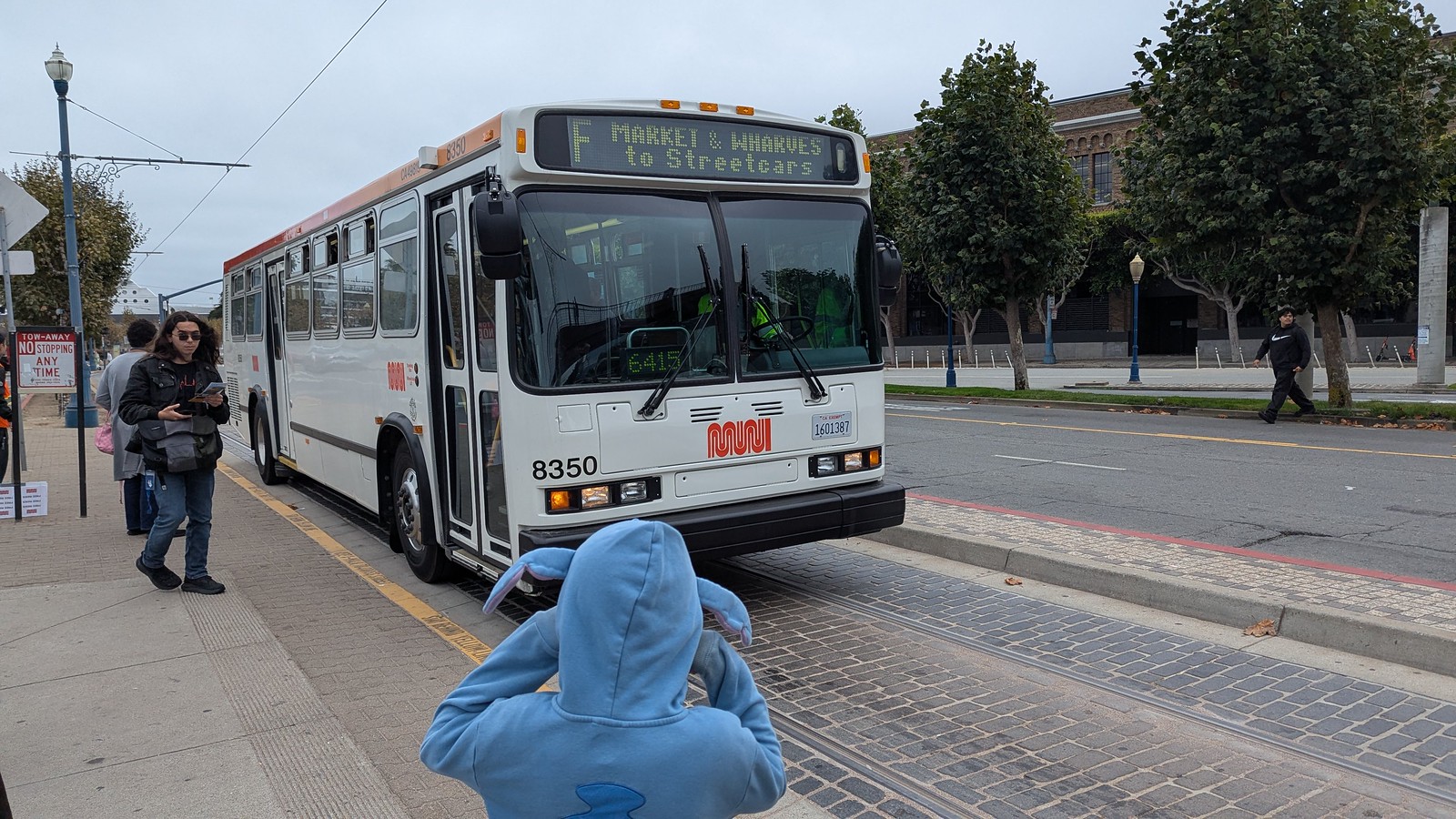
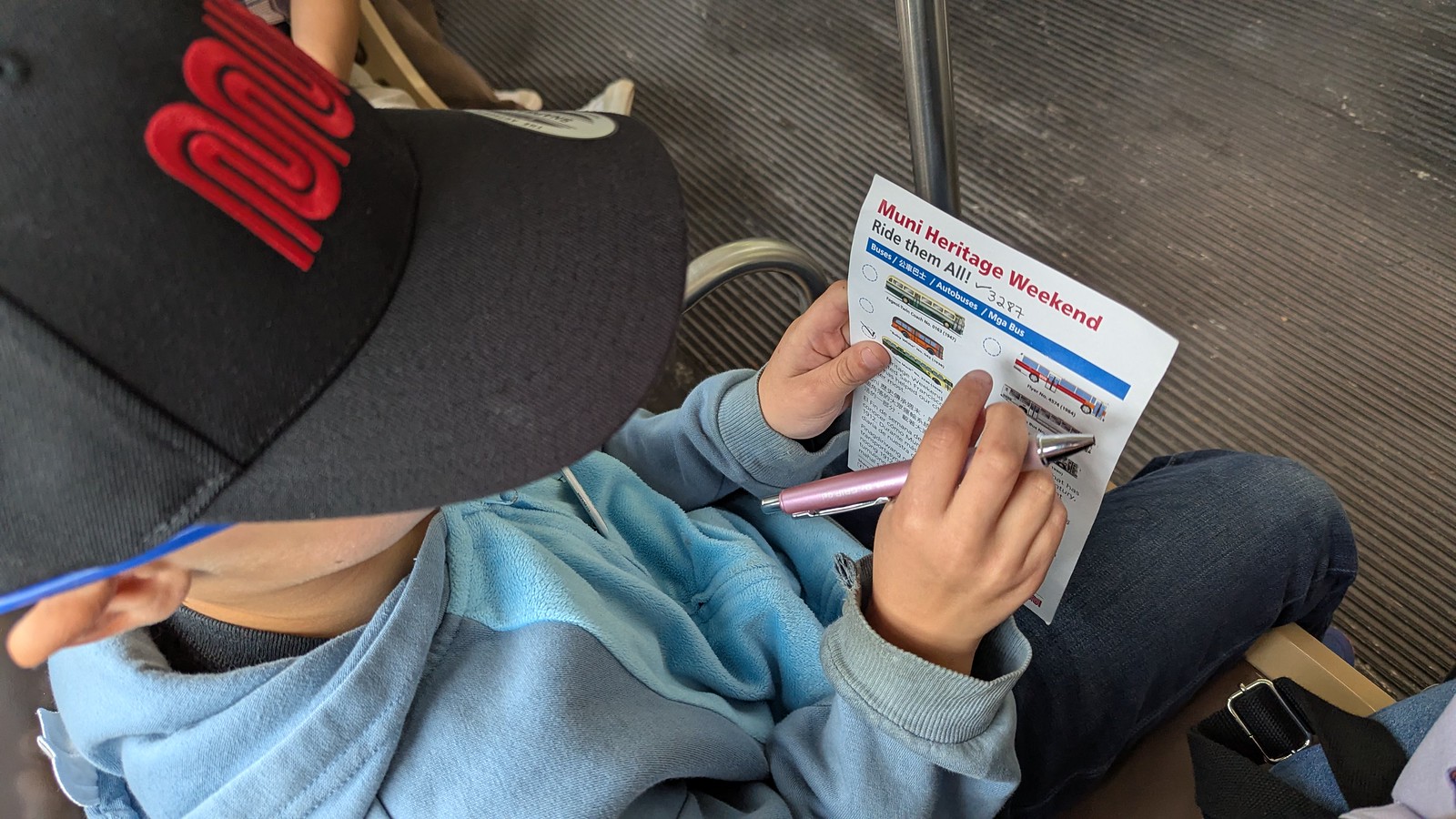
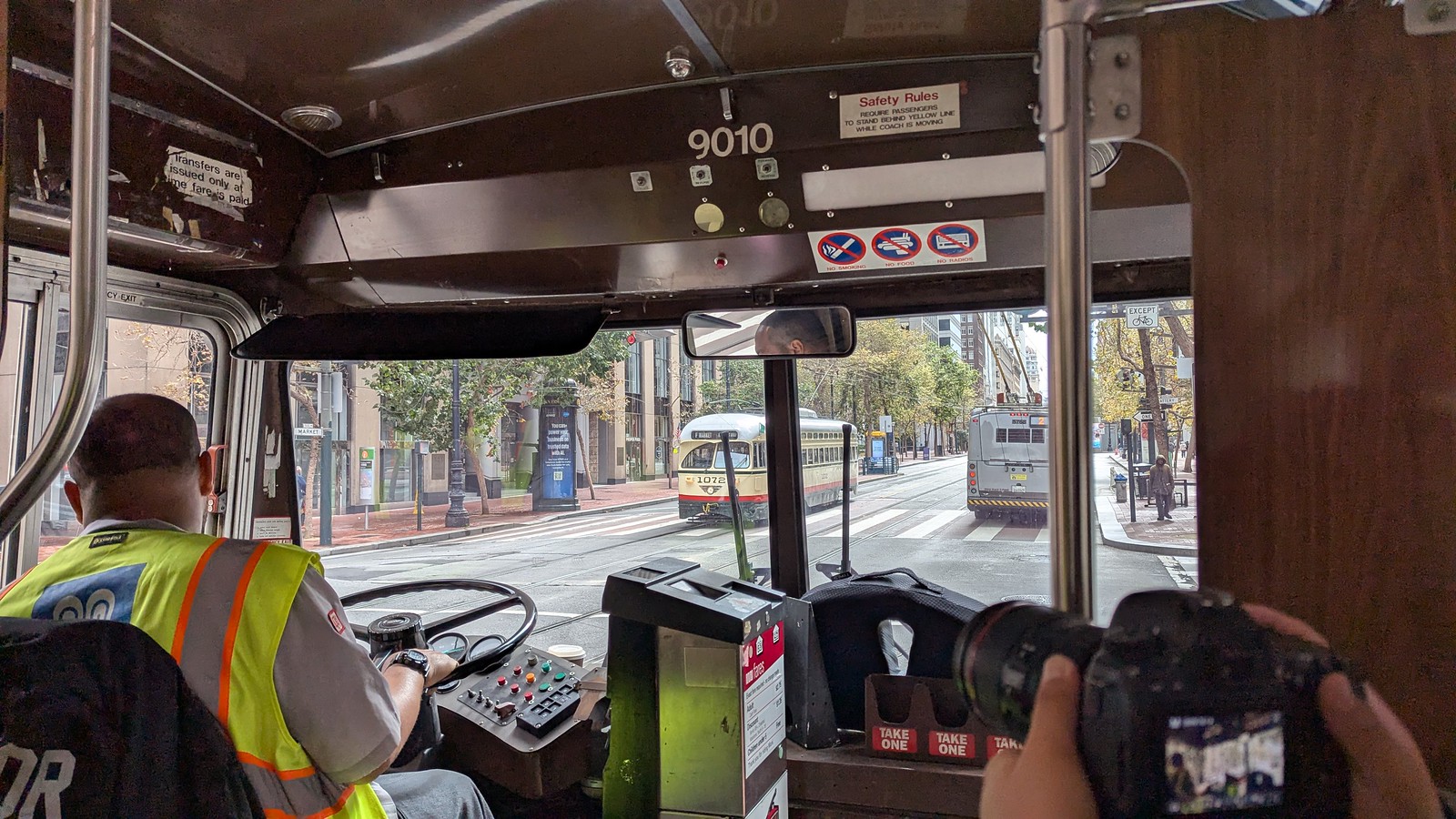
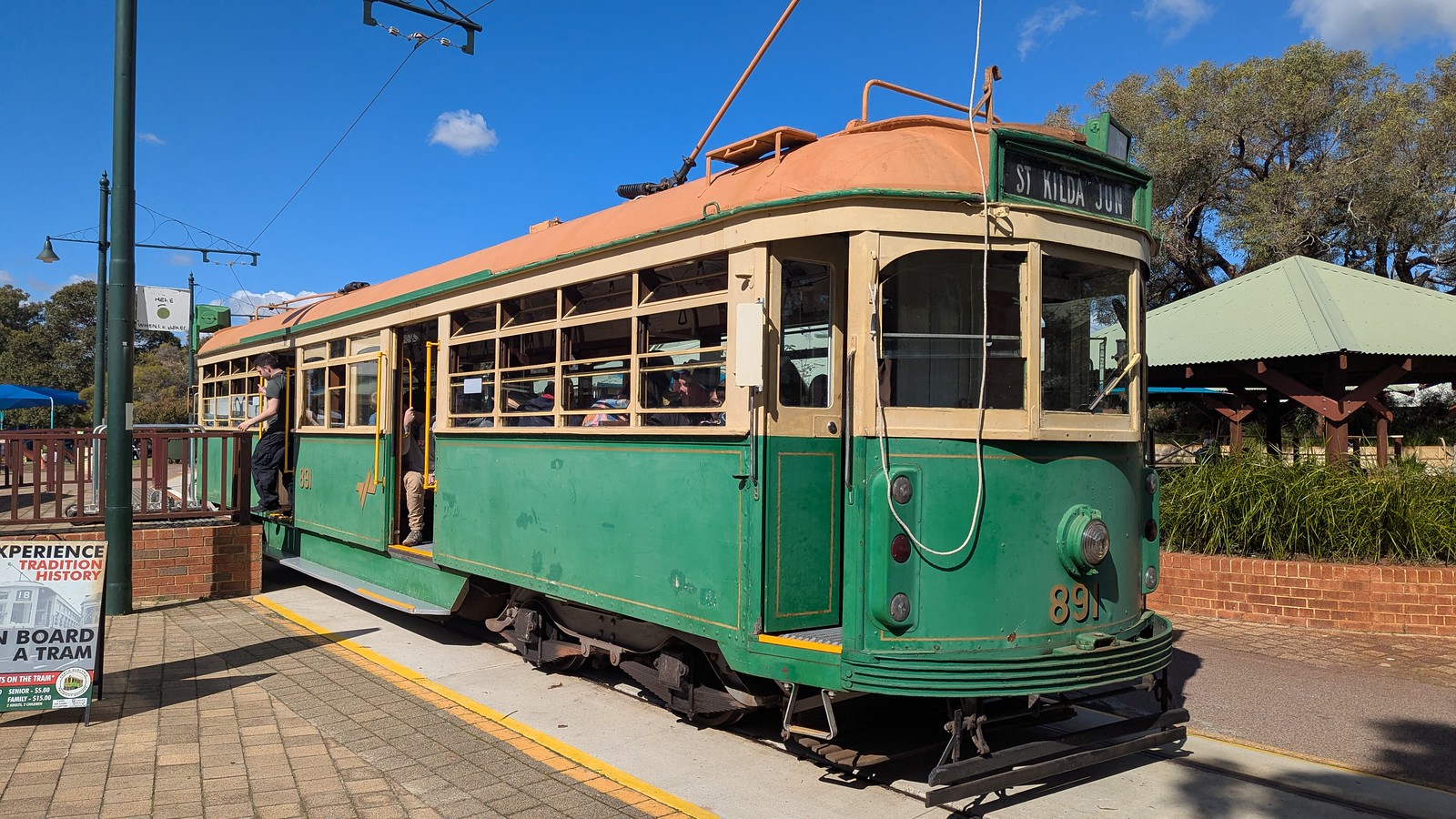
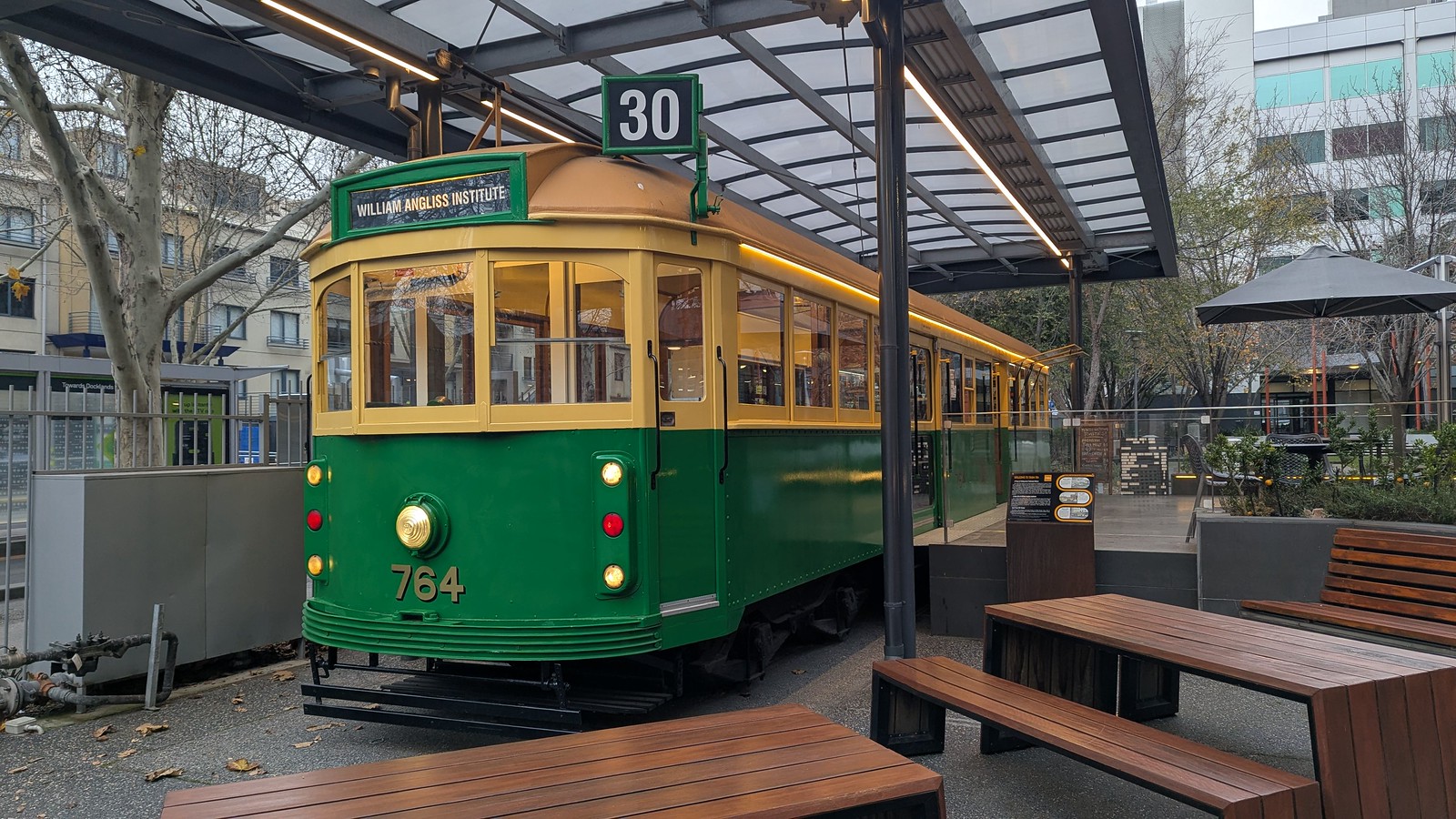
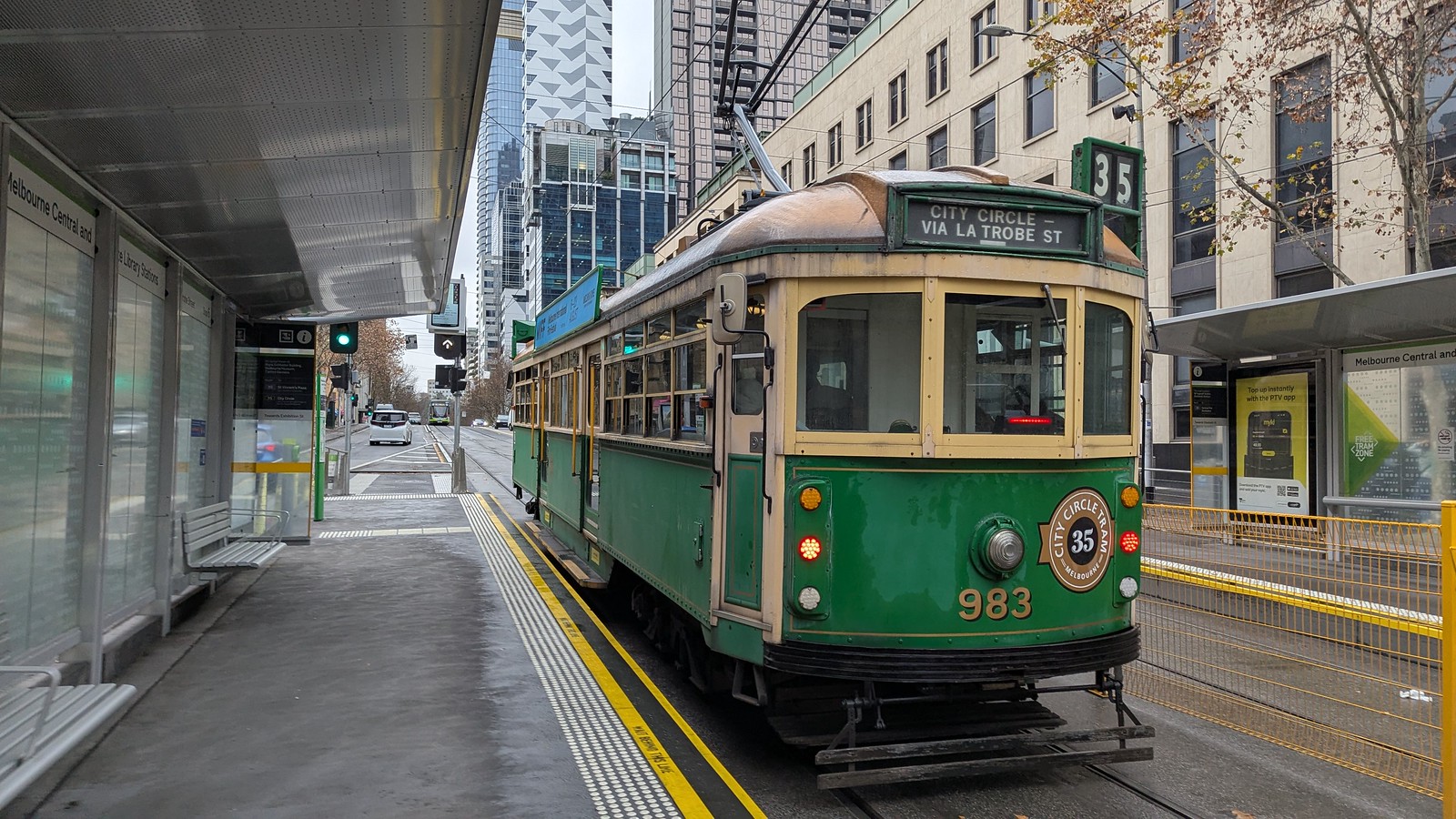
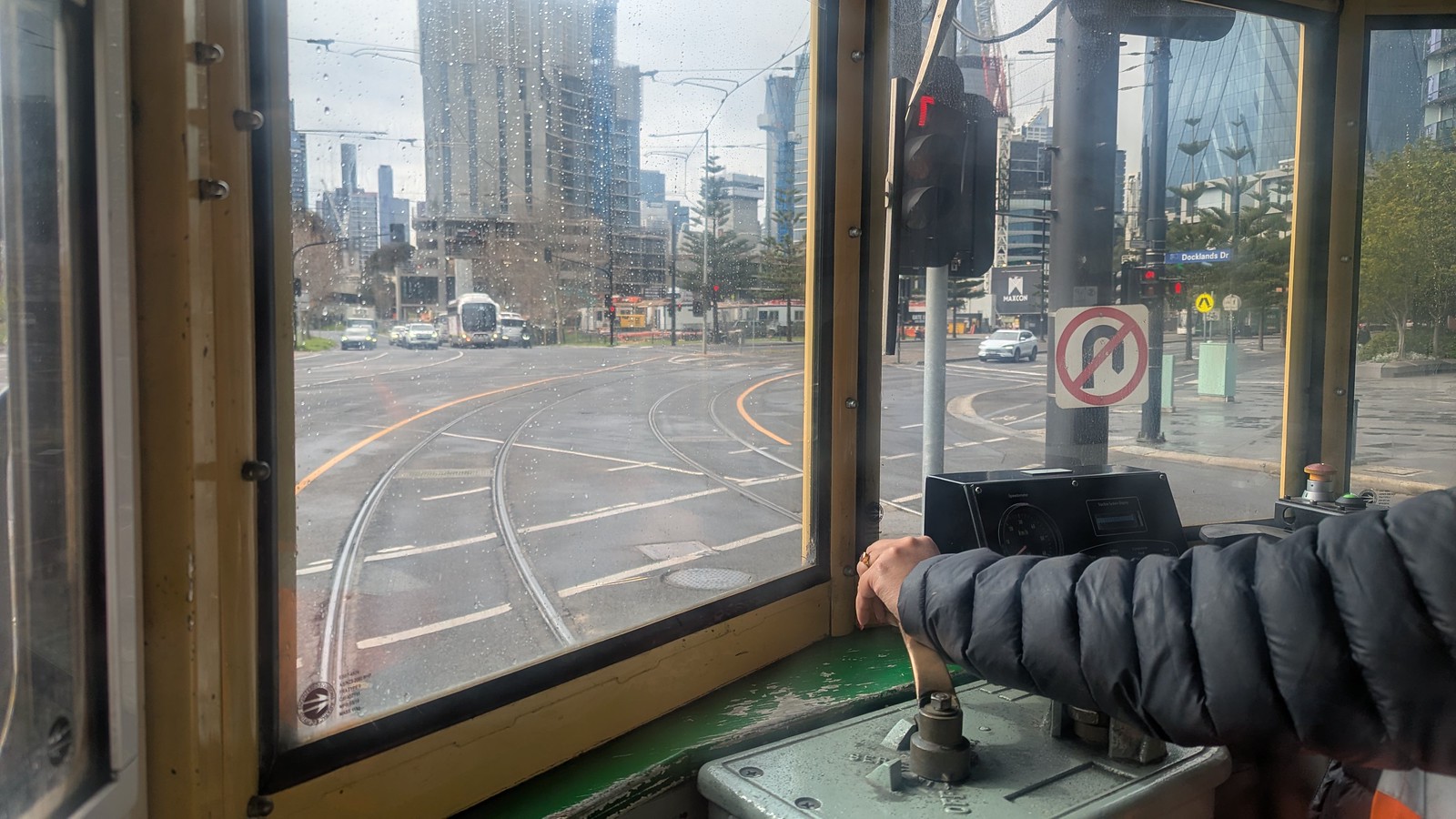
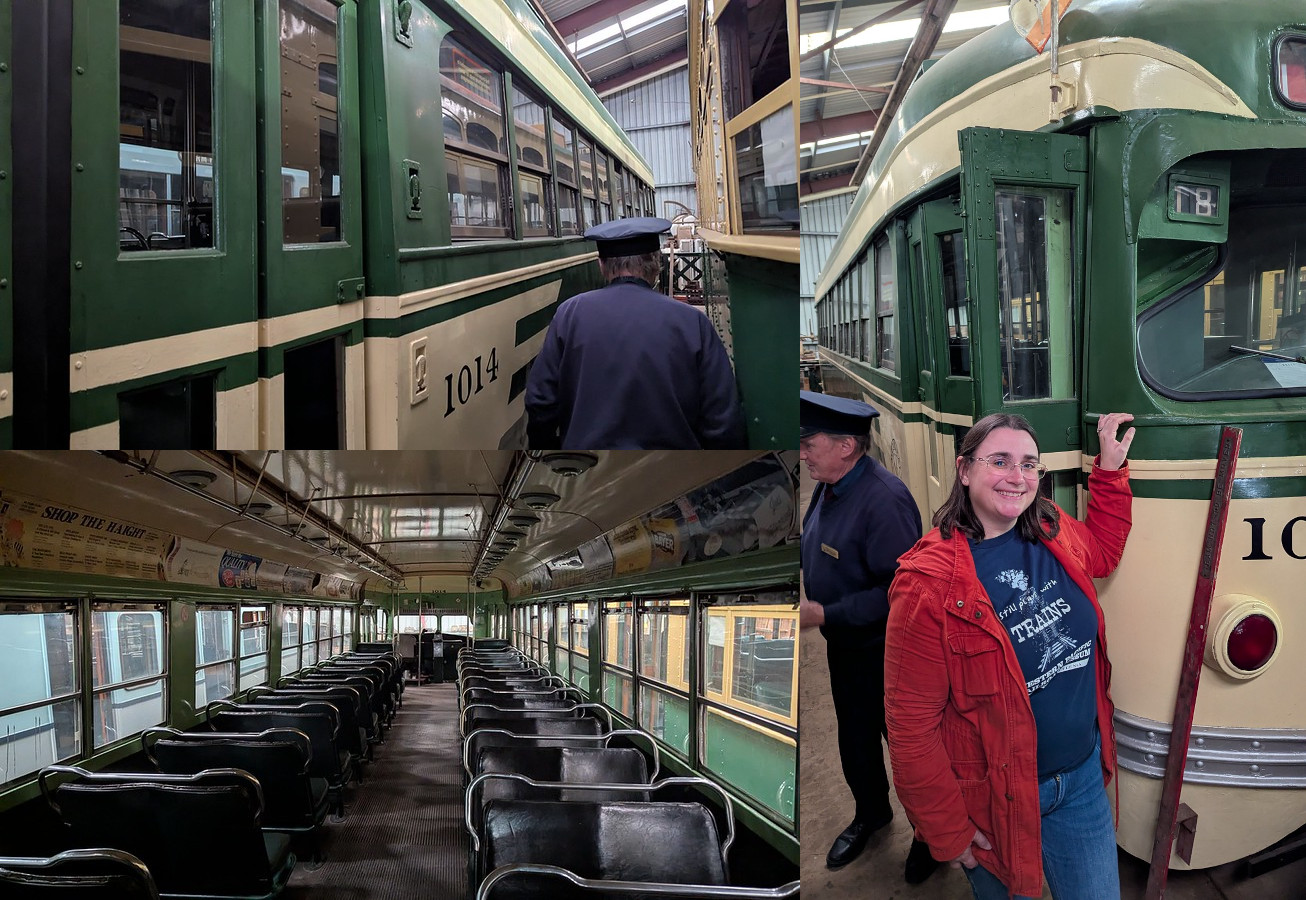
The day I was in San Francisco I met up with MJ in the evening to go to The Exploratorium for an after-party for the NANOG conference he was attending and was taking place locally. It wasn’t quite a date night, since it was a work event for him and I wandered off to explore exhibits on my own while he talked shop, but it was still nice for the two of us to go out as adults without the kids for a bit, and we did have some nice vintage streetcar rides together before heading home for the night. Unfortunately, we didn’t have the opportunity to catch up on time for a date night over Valentine’s Day either, since that’s when my mother was visiting, and MJ was fighting off food poisoning for several days anyway. I hope we can do something nice together soon.

In all, I’d say February was a nice on-ramp to the coming months that look to be quite busy. March begins and ends with travel for me, and the spring and summer are always full of activities.

The Adventures of 2025

I feel like my life turned a corner in 2025. The kids became more slightly self-sufficient, I can step away for a shower or curl up and read a book while they’re otherwise occupied, which has been really helpful to my mental health. Speaking of which, I explored some things about myself and what I need with a therapist, and that has started to help me find my place as a mother who is also committed to her career and hobbies. I had several high-profile successes at work, which really propelled what was already shaping up to be a busy year, and I have a lot to be proud of.

We had the usual cuts, bruises, illnesses and infections throughout the year and a couple trips to urgent care. This included my own struggle with tendentious in my right elbow, which is finally getting better. Nothing major health-wise though, which I’m really grateful for. Aaron has started going to public school with Adam, entering Transitional Kindergarten as Adam went to 1st grade. I’m happy to say that’s going well too, I even joked the other day that the only one who cried on the first day of school was me.

In August we expanded our family by one fluffy member by adopting Zara the cat. She’s been an excellent addition to the family, and even if having a pet does add to the daily chores, it’s totally worth it to have a fluffy friend living with us again.

We also said goodbye one car and added two minivans to our family, finally retiring MJ’s 2000 Alero and replacing the family cars both here and in Philly with a pair of nearly identical Kia Carnivals.

Over the summer we spent six weeks in Philadelphia visiting with family and took a little side vacation up to New England to explore Boston and visit with my sister and my nephew, coming home with a trailer behind us so I could get my other sister out of her ancient storage unit.

At work, 2025 was the year IBM launched the IBM z17 mainframe. I participated in a bunch of launch activities, including writing A Tour Inside the IBM z17 where I get to put on my hardware enthusiast hat and dig through technical manuals to discover gems about the release to share. For the IBM LinuxONE 5 launch the following month I joined my Linux peers at the Red Hat Summit where we hosted a popular IBM LinuxONE AI Arcade. That’s also where we announced the launch of our hosted GitHub Actions service for IBM Z and Power, which I’d been working on for more than a year.

In the fall I took my IBM LinuxONE AI Arcade on the road with a stop at IBM TechXchange, where I was able to showcase it at the booth, and do a TON of open source stuff. Bonus, I was asked to help with an unboxing of a mainframe live on the expo hall floor, which was a ton of fun. It’s pretty rare that someone like me on the software side gets the opportunity to physically handle a mainframe!

At GitHub Universe and Ohio LinuxFest I had the opportunity to meet up with a bunch of my open source pals, so while work travel was somewhat limited this year, I took full advantage of the opportunities that did arise.

It wasn’t my biggest speaking year either, but it was the right amount for the number of other things I had going on, especially around the launches.

It was a busy year, but for the first time in a while it was busy in a way that felt really rewarding. With kids who can now do a lot for themselves (and no more diapers!), a lot more of our energy could be put toward crafting and enjoying time together doing things we love.

In 2026 as the boys start getting involved in more organized activities, I think we might calm down some of our weekend adventures to give us all some time to rest, but we’ll see! We do love going on adventures.

We bought a 3D printer

A lot of my friends have 3D printers. It’s one of those things you get when you’re existing in a geeky world of Makers and have a fascination with how things work and assembling things yourself. The fact that MJ and I didn’t have one was a bit unusual, actually. The reasons were legion. First, we didn’t have space for one in our small condo in San Francisco. Then we moved to a big house, but immediately had kids who took up basically all of our previously free time. Now that the kids are a little more self-sufficient, AND they can kind of get into 3D printing too, we decided it was time to pull the trigger.

All the research and purchasing was done by MJ. I think the daunting number of options was a bit overwhelming to me, and if we waited for me to do the research we wouldn’t have landed on a very good result, if we ever got there. He decided that based on our time and experience (both minimal) plus the desire to print things up to basic engineering parts, meant that the Bambu H2D was the right model for us. We also bought a mountain of filament. It’s topped with a 4-color AMS Pro 2 and an AMS HT.

The whole thing is terrifying to me. Hah! I don’t want to break it. So I’m following MJ’s lead here as he shows me how load and dry filament, change nozzles, and do some basic things from the UI on the printer itself. Thus far I haven’t worked up the courage to use Bambu Studio and print something by myself, but I’m sure I’ll get there. Plus, it gives MJ the opportunity to play with it first while I endlessly send him silly things to print for me and the boys.

Obviously, I started off with an IBM z17 mainframe model. We switched to the 0.2mm nozzle and did a long, slow print for the first one, all orange, to see how stunning we could make it. And stunning it was.


We’ve also tried a few other prints of the z17, like an all black one, playing with orientation, and also playing with multi-color so we could print the inset colors on the doors. We’ve had varying levels of success, but it was a fun model for MJ to experiment with new things on the printer as we get going.

Our youngest, Aaron, believes we got a 3D printer just to print toys for him. Over the summer he found a 3D-printed Toothless dragon at a toy shop and MJ got to chatting with the guy at the shop who printed them, going full 3D printer geek mode. Instead of buying one, we bought the printer file so we could do one of our first proper multicolor prints, and it came out beautifully! It’s one of my favorite things so far. I want one too.

Adam has followed in my love of stuff from the 80s somehow (poor kid) and has asked for stuff from Tron and Knight Rider. There’s limited real merchandise for both, even with the latest Tron: Ares film, but the 3D printing world is the right kind of people for finding this sort of thing.

First up was a “wireframe” type wall art of KITT the car from Knight Rider, using this model as a starting point: KITT Night Rider 2D wallart. MJ loaded it up in an editor and modified it so the print would be done with both red and black, instead of separate pieces. Neat. If we did it again, we’d probably do it face-down so the part that faces outwards is the one with the cooler looking surface.

Next up: Tron! We bought some glow in the dark filament, so this was a nice opportunity to give it a spin. We went with “Version 2” of this Tron Legacy Logo. No edits on this one, it just came out looking really cool!

Our next step was making a bit of a pilgrimage: to Microcenter. I have never been to the Microcenter here in the bay area, though I used to go to the one just outside of Philly. It was a great store for computer stuff, but these days it’s also a great spot for 3d printing stuff. The boys also wanted to go to see EVERYTHING. They have several models of 3D printers on display, and staff will help with demos if you ask.

They also have a massive machine that dispenses filament, when it works. That day was not a day it was working, which was kind of a bummer. Not just because I wanted to see the giant filament vending machine work, but also because their alternative was manual searching through hundreds of spools of filament on a series of carts, yikes! It was mostly a fun trip, so I got a couple PLA+ filaments I wanted for a project and then got some goofy PLA ones (sparkles!). At least the PLA+ was on sale.

I’ve started learning how to use FreeCAD, because there are some things I want to eventually design, like a replacement ribbon cover for one of my portable typewriters. It’s slow going, but thanks to a recommendation from Mark Fraser I’m well on my way with FreeCAD for Makers.

Next up: A big project! I was pretty excited to learn that someone had 3D printed a clone of the AEG Mignon Index Typewriter. They say it’s the first typewriter someone has made using 3D printing, and I don’t own an index typewriter, so I thought it would be a fun merging of worlds. It’s over 100 pieces though, so I’ve once again dragged MJ into my project and I’ve been going through the files and picking colors and order of print while he’s loading them up in the slicer. Stay tuned! It’s going to be really cool. I hope.

And maybe I’ll gather the courage to use Bambu Lab and print something all by myself.

Saving Zara’s Tail

In August we adopted Zara the cat! I wrote about it here: Zara.

She’s has the best temperament for us, and we’ve all absolutely fallen in love with her.

Unfortunately, she came to us wounded. I mentioned her first vet visit was prompted by a paw wound, and that led to about eight weeks of various types of care for that. Antibiotics, a foot bandage for a couple weeks, ointments, creams. By late October, we were grateful to have that behind us, but another problem became apparent at the end of September: she had a tail wound too.

Early on we thought she had merely had a broken tail, but when a chunk of fur fell off and exposed a bloody tail wound, we realized the lump on her tail was a lot more. She saw an emergency vet in Dublin that day because I panicked: my cat is falling apart! From there, we went through more attempts with antibiotics, wound care, and added a plush “donut” to her cone configuration. I even tried wrapping her tail and dousing it in flavored spray that’s supposed to deter her, but she was able to brave the bad smell and taste to remove it (this didn’t surprise anyone, but I had to try!).

Once we sized up on the cone to a Small, I bought raised food dishes so she could still eat with her cone on.

Ultimately, I had to get her a Medium size which got us into dog cone territory. I had to punch bonus holes in it fit around her neck, and added a small harness and medical gauze to hold it in place. That’s when we finally got her to stop biting her wound so it could heal.


Poor kitty, it’s a really big cone!

We changed out her litter box to an open one that’s easier for her to enter, though she did develop the unfortunate habit of peeing next to her litter box instead of inside it, which we cleaned up for a few days before MJ went out and got a case of pee pads, which we now just replace every time she uses it.

At almost every other vet visit, the various vets we saw would quietly mention that partial tail amputation was an option. A surgical removal would heal more quickly and it would be over, and likely less expensive when it was all said and done. It was nice to know there was a healthy escape plan out if we really couldn’t get the wound to heal, but we wanted to save her tail!

We saw a dermatologist across the bay in Mountain View who did a tissue culture and that’s how we discovered she had a MRSA infection and that’s why it wasn’t healing. Fortunately, they didn’t see signs of a deeper problem, like a skin or neurological disease versus just wounds that needed to heal. Another round of stronger antibiotics, and ointments!

In November we started doing weekly Phovia light treatments, which I was incredibly skeptical of, but the dermatologist felt strongly about. Thankfully, I found a clinic less than 15 minutes from home that would do it, instead of making the trek out to Mountain View. Those treatments were paused when we went to Philadelphia for three weeks over the December holidays and she stayed with a pet sitter, and I’m sure that delayed healing more. We resumed treatments in mid January and finally started to see significant healing. In January, we also met with a vet who did Hyperbaric Oxygen Therapy (HBOT) treatments, but thankfully by the time the [prepaid] appointment rolled around, her healing had progressed to a place where they felt it wasn’t necessary. We continued the Phovia treatments through the end of January.

Today, she was given the all clear to remove the cone! Her wound has scarred over and aside from a hint of dryness, it looks really good. Once the cone is off, she didn’t immediately target her tail for grooming, which is good news.


Cone-free drive home!

It’s been a lot. The vet visits are during my work hours, so I’ve had to work a lot early mornings to stay on top of work these past couple months, thankfully I have that flexibility. Having a cat in a cone for this long, especially one that’s so big that it’s not designed for cats, has been a challenge for all of us. She’s less able to snuggle with the cone on, it makes playtime harder and I’m always worried she’ll take a tumble and hurt herself somehow, and I’m sure it has been no good for her neck and spine. Fortunately, she’s young and this will all soon be a distant memory.

My biggest regret is not getting the bigger cone earlier, since the smaller cone + donut only prevented her from getting to her foot, and likely made the tail healing several weeks longer. I was just really worried about logistics of eating, relieving herself, and generally navigating the house day to day with the larger the cone, so I really wanted to avoid it.

What’s next? We need to ween her off kitten food, since she’s a year old now. We’ll also work on the litter box situation, the vet suggested in a few days to put a box with the old clay litter out next to the pellet litter box so she can get used to it again and maybe she’ll switch over on her own. I’m really hoping that cone-free life and changing the litter also nudges her back to peeing in the box instead of next to it. We’re also slowly re-introducing her cat tents and caves, which we had to put away since she was getting stuck and using them to remove her cone. Hopefully all will be back to normal within a few weeks.

And here’s hoping she has an injury-free future! The vets we’ve seen along the way are convinced she was hurt during her life as an outdoor cat, and without all the risks of outdoor life, she should live a happily wound-free life now.

January

The last quarter of 2025 was a lot of fun, and a lot of work. Conferences! Holidays! Birthdays! It occurs to me that I with the life I’ve built, I don’t know how to do things any other way. I don’t like sitting still. I need to nurture an ability to relax though, as I realize all of this takes a toll that I don’t expect and don’t realize I need to recharge from until it’s too late. Too late was this January, when I found my mood and energy levels much lower than I would have liked. I’m OK, just needing a bit more rest and time to myself than I usually do, and a dose of kindness aimed at myself when I realize I need these things.

So we did the really logical thing this month: We rented a temporary storage unit nearby and started cleaning out the garage so we could begin using the space more effectively.

WHAT?!

But actually, it’s not the worst idea we’ve ever had. And it’s all part of a master plan. We’re going slowly, and it’s finally moving the needle on several projects inside the house that we need space in the garage for. It’s also requiring us to slow down a bit on weekends and not pack in so many adventures and outings that need to be planned. We build Lego, we do a storage run, the boys ride their bikes, I read for a bit, we start a 3d print, and get some satisfaction from actually making progress.


At least, that’s the idea. It doesn’t feel like we’ve gotten much done, and I really don’t enjoy spending so much time on our stuff, but I think we’re heading in the right direction.

But you know us, we haven’t actually stayed home all month.

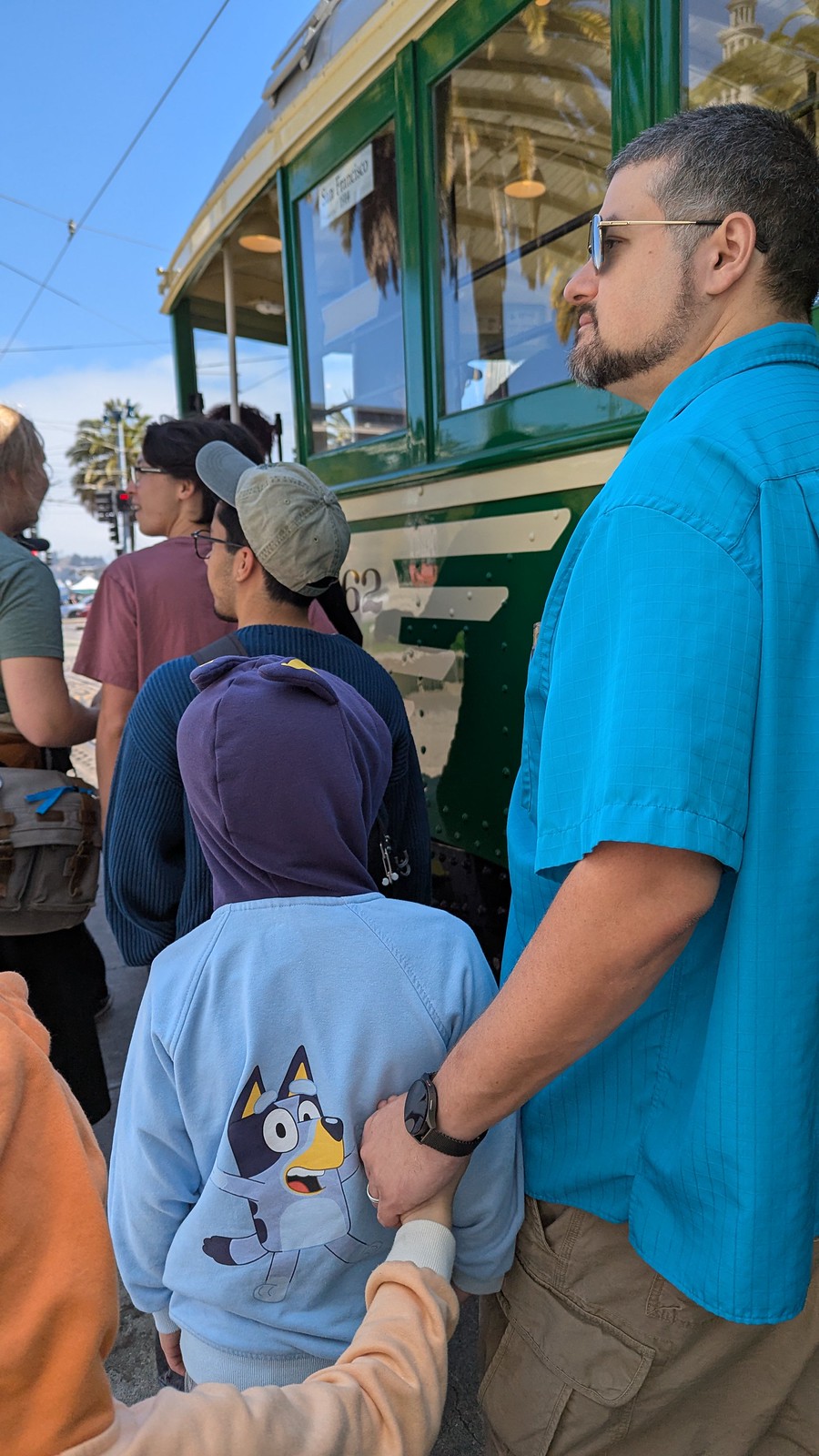
We went up to San Francisco early in the month for a couple of quests. First, was to get Aaron a Clipper Card. Now that he’s five, he has to pay for his bus rides on AC Transit and for BART, though at reduced rates. A Clipper Card allows for this to be done easily, and since the boys love public transit, the ritual of getting their first Clipper Card is a whole adventure. For Adam we got it at Embarcadero Station, but this time we went up on a Saturday and the hours at Ferry Building were much better for our visit, and that’s where we got Aaron’s card!

From there we took a vintage streetcar and a bus over to North Beach where we had lunch at Original Joe’s, which struck me as a bit fancy for a lunch with kids, but surprised me with the family friendly feel and good Italian American food, which I’ve struggled to find in California. I suspect we’ll be back. But why were we in North Beach? The second quest! I happened upon a Smith Corona Skyriter on Facebook Marketplace, and made arrangements to buy it from the fellow selling it in North Beach. I don’t need another typewriter. It’s a model I already have! But I love the Skyriter, this is a different year and case than I have, and it came with the original manual! It needs some cleaning and a new ribbon, but otherwise seems in find condition. I’ll write about it once I get it going.

Then one evening when MJ was working from home (no evening commute!) I fed the boys dinner early and we went over to the Oakland Zoo for the Glowfari. The boys and I went with a couple of our au pairs, past and present, back in November, but MJ hadn’t seen it yet. We forewent tickets to the actual zoo grounds, and instead did the zoo train, which didn’t require zoo admission, just ride tickets and with our membership parking was free. Plus, the boys and I didn’t see the ride area or take the zoo train on our last visit! We kept the boys up a little late that night, but it was a lot of fun, and I’m glad we got to loop MJ in on the lantern fun too, even if it was just a taste.

And did you notice that passing mention of a 3D printer? MJ and I have talked about getting a 3D printer for years. Of course we have, we’re totally the kind of people who would have one. But we also knew the burden it would bring. We didn’t want a cheap one, so we’d invest in a nice one. We needed to have space for it, and all the stuff that comes with it. So MJ dove into research mode for a few months and we ended up ordering a Bambu Lab H2D and a bunch of filament over the holidays. I’ll write about this more too, including some of our first prints, but it’s been a nice diversion from storage and some of the more stressful life stuff lately. I’ve started playing around with FreeCAD to for when I’m ready to transition from silly toys and things to some things I want to create myself.

Adam is 7 years old!

There’s this quote you hear a lot when you become a parent and you’re in the thick of changing diapers and fighting insomnia: “The days are long, but the years are short.” As I think about our first child turning seven years old, I really feel that. How can seven years have passed already? But also, wow, I feel like we’ve been parents for ages!

It’s all celebration though, he’s always been a kind person, but he’s grown into a curious little kid who we have a lot of fun with. This past year he’s really gotten into building worlds in Minecraft, and has generally built upon his previous curiosity of how everything works into coming up with really interesting conclusions based on his new found knowledge. He’s made major progress at school, and while he still leans on me a lot, I am seeing sprouts of independence and big brother leadership in him as he can complete a lot of daily tasks himself, and has started teaching Aaron how to play games (both video and board/card games).

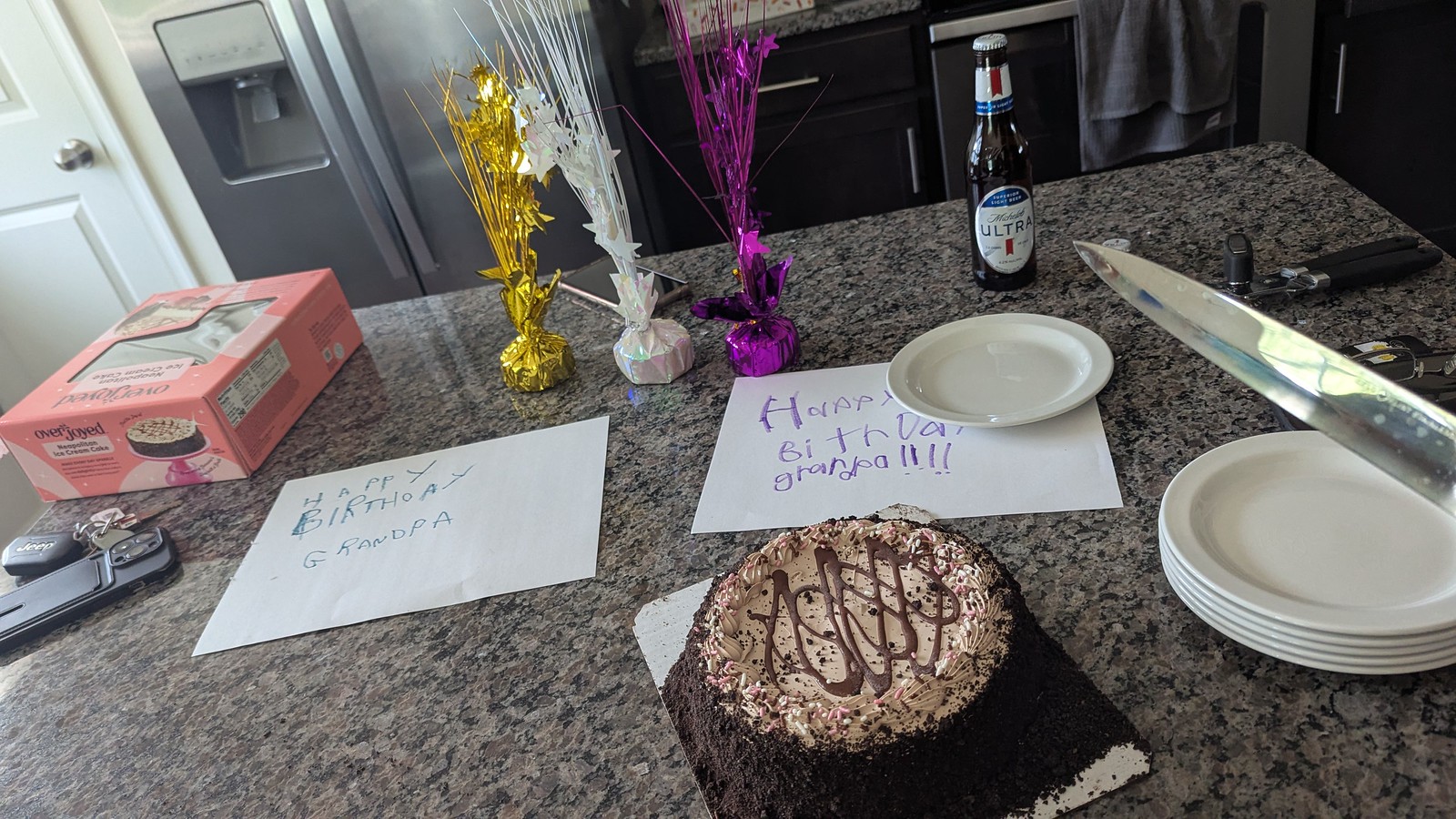
Given his love of Minecraft, we went with that theme for his birthday. Since we were coming back to California just a couple days before his family birthday party here, I ordered the supplies while we were in Philly and just brought them all home. This also allowed me to grab some cupcake picks from the stash and put them in for some flair at a little birthday party we had with grandpa on his actual birthday while we were still in Philly. That night, we went to our favorite Italian place in town were he got a candle in some ice cream too.


Back in California, he reminded me that he wanted a “Sniffer cake”. A sniffer is a six-legged shaggy cow thing that we all kind of fell in love with because they’re so hilarious. They aren’t wildly popular like some of the animals in Minecraft, so there were limits to what I could do with that theme in mind, and a whole sniffer cake was not feasible. The options for Minecraft cakes were also limited, so instead I got creative. He likes chocolate cake and the Minecraft Cherry Blossom Garden Lego set has sniffers in it, so maybe sniffers like cherries? A chocolate cake with cherries on top it is! And Adam already had that Lego set, but I bought a second one so I could decorate the cake accordingly. It was a really busy cake, but I think I hit the mark.

Complete with a sniffer chomping on a cherry.

I also found a plastic toy sniffer online, which came out with the cake and the boys have enjoyed playing with.

Joining us for our family birthday party and all this Minecraft stuff was two of our former au pairs Claudia and Rebeca, Claudia’s husband, and our new au pair Ana. It was a fun afternoon, and people stayed into the evening catching up and playing with the boys, so it was a really nice day for him.

Onward to life as a seven year old!

The search for a deity

I’ve been learning about and observing Jewish traditions for over a decade, but I haven’t converted. When asked about religious affiliation I give a vague “my family is Jewish” and leave it at that.

Why?

I’m still an atheist.

Back in 2012 when this journey was quite new I wrote about this: Joining a synagogue.

For everything except the question of a deity, I’ve gone quite far down the path to Judaism. My first stop was doing an Introduction to Judaism class before we got married by a rabbi. I’ve since read several books to expand my knowledge about Judaism. I did docent training at the synagogue we belonged to in San Francisco to learn all about the history of that temple and its place in the Reform movement. Today our children are being raised Jewish, we observe all the major Jewish holidays, and some of the minor ones that we found a connection to (Tu B’Shvat is coming up!). We observe Shabbat weekly, don’t eat pork, and have joined our local synagogue here in the east bay where they will start religious school soon. I’ve also started dabbling in learning Hebrew. In spite of not being much of a cook, I learned how to make challah, latkes, and hamantaschen. It turns out that I’ve always had a fondness for several Jewish food staples. When I travel, I visit Jewish landmarks and museums, like the synagogue I visited in Mumbai or searching for the menorah at Fonthill Castle. When my life was more conducive to it, I would spend part of Shabbat reading Torah, and a few years ago I followed along to reach every weekly Torah portion.

Most importantly, I’ve embraced the teachings and living a Jewish life for myself. I enjoy pausing to reflect during the holidays. I appreciate that rituals. I found that my own drive to fight injustice and teach others have always been quite aligned with Judaism. I enjoy studying and asking questions. It’s all very important to me.

But I’m a very literal and analytical person. While rituals and lessons from Torah can help guide and shape my life because I recognize wisdom and appreciate cycles, I don’t have belief in their literal truth, or a deity.

When I was having infrequent meetings with our rabbi in San Francisco, he loaned me the book For Those Who Can’t Believe: Overcoming the Obstacles to Faith, which became part of our permanent collection when he passed away before I could see him again. It didn’t get me where I need to be though. I’ve spent years since continuing to learn and live as a Jewish family, but deep down worrying that this would be what always prevents me from converting.

Now that we’ve joined a synagogue again and plan on going more with the boys, I want to revisit this. Is there a path here for me? Or is my role in our family and community something different?

Menorah at Fonthill Castle
The menorah we searched for, and found, on a ceiling in a hallway at Fonthill Castle